
The complete guide
How to Choose a Silk Sleep Mask That Actually Blocks the Light
The problem with most sleep masks
You buy one, you wear it for three nights, and then it ends up in a drawer. That is the usual story. Either the fabric scratches, or the elastic digs in, or you wake at five in the morning with a bright stripe of daylight coming in under your nose. None of those are small annoyances when you are trying to sleep.
Light is the thing that wakes most people early. Your body reads light through the eyelids, not just through open eyes, so a thin or badly shaped mask lets in enough brightness to nudge you awake well before you are ready. A good mask fixes that. A bad one just gets in the way.
The three things that separate a mask you keep from a mask you abandon are the cloth, the shape, and the strap. Get all three right and you stop noticing the mask at all, which is exactly the point.
Why silk, and why 19 momme
Silk has one quality that matters a lot when fabric sits on your face for eight hours. It is smooth. The fibres are long and even, so there is very little surface texture to rub against your skin as you turn over. Cotton, especially a cheap jersey, has shorter fibres and a rougher surface. You may not feel the difference in five minutes, but you feel it across a whole night.
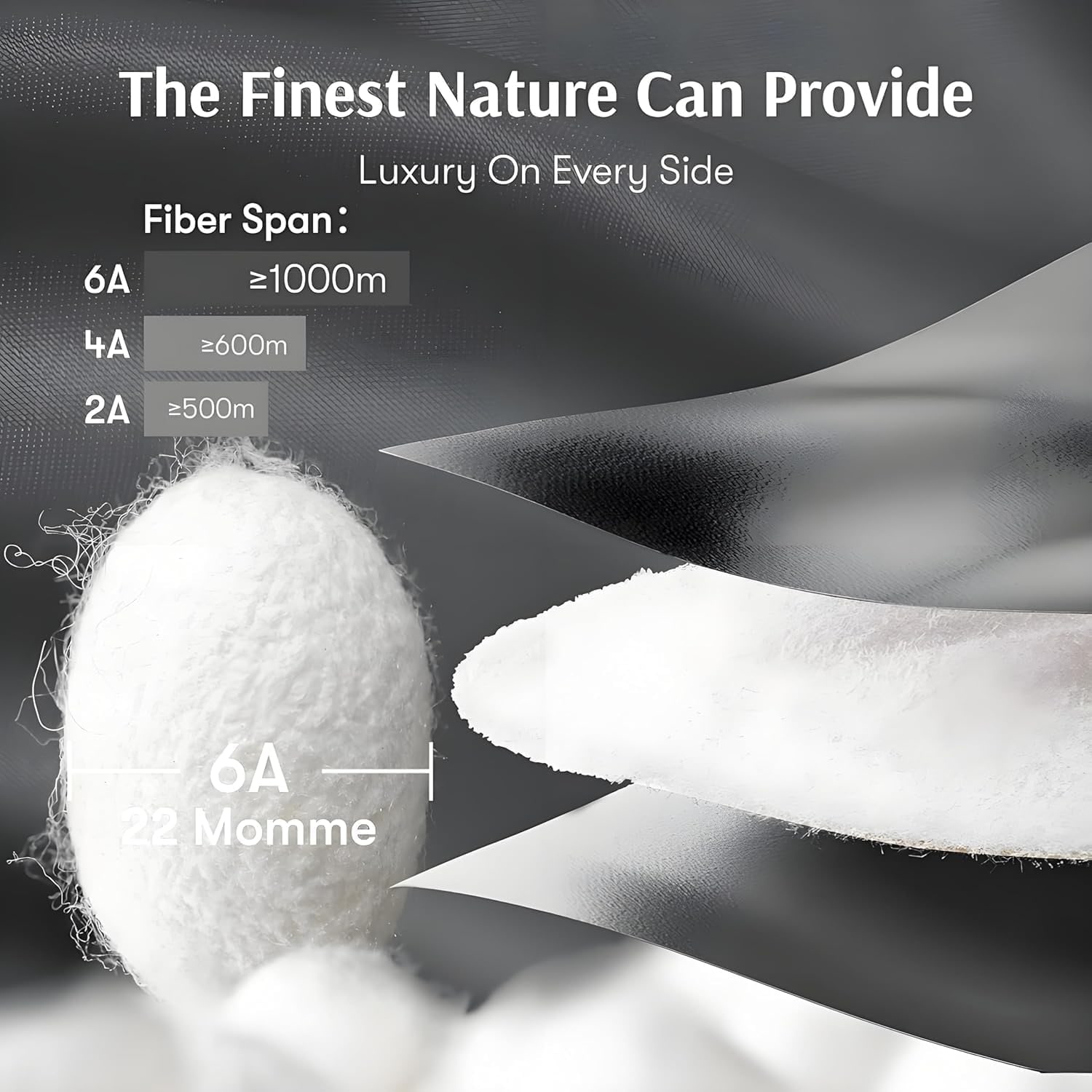
Momme is how silk weight is measured. The number tells you how much a fixed area of the fabric weighs, so a higher momme means a denser cloth. Lightweight silks sit around 12 to 16 momme. At 19 momme, this mask is in the mid-to-heavy range. That matters for two reasons. First, denser silk is more opaque, so less light passes through the fabric itself. Second, it has enough body to hold its shape rather than collapsing against your eyelids.
The grade is listed as 6A, which refers to the quality of the raw silk filament. Higher grades come from longer, more consistent fibres, which is part of why the finish feels smooth rather than slubby.
The nose gap, and why it decides everything
Here is the test for any mask. Put it on in a bright room, keep your eyes closed, and look for the glow. On most cheap masks the glow is in one place, right beside the bridge of your nose. A flat piece of fabric laid across a face leaves two small triangles of space there, and morning sun finds them without fail.
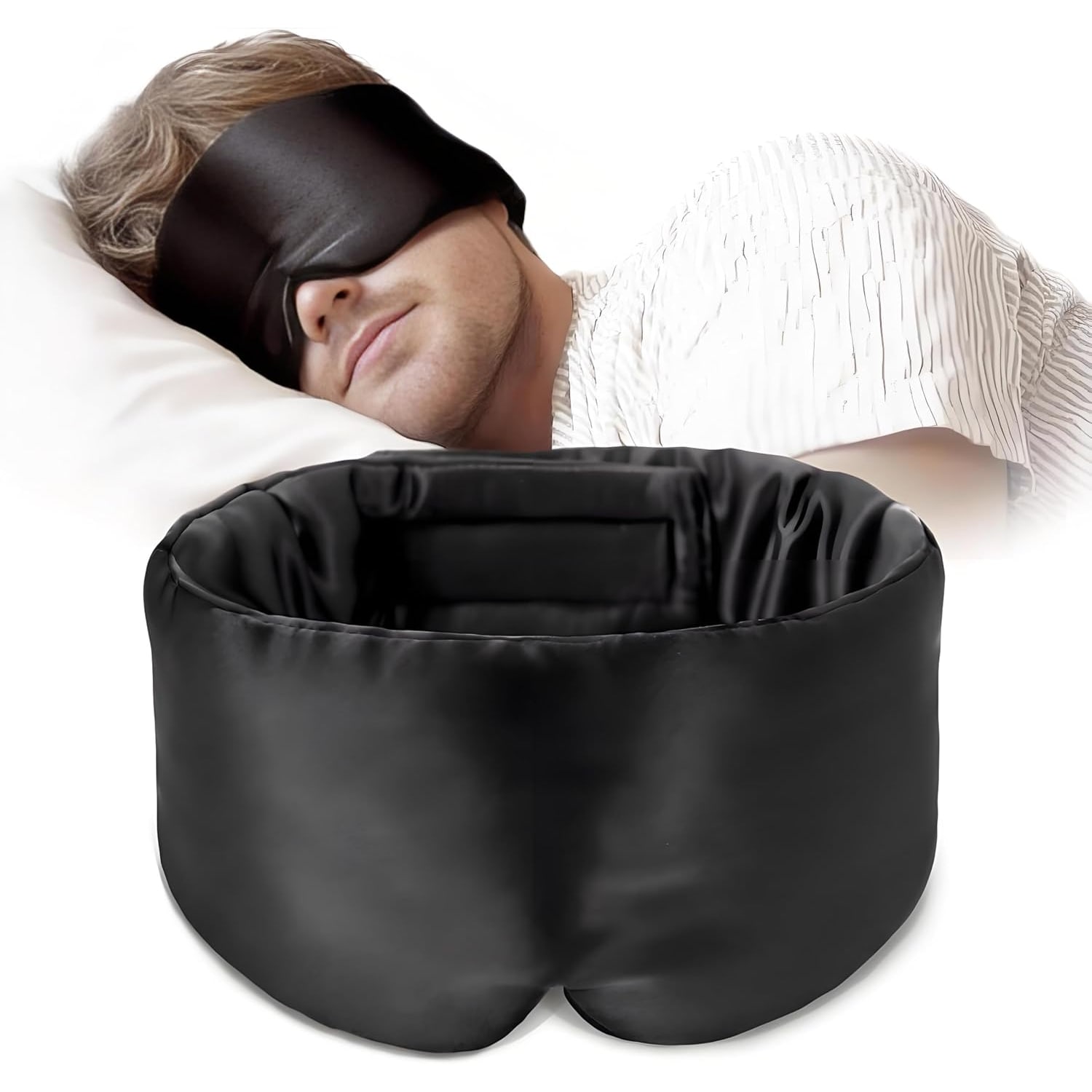
A shaped nose section is a cut and a curve that follows the bridge instead of bridging over it. It does not seal like a swimming goggle, and it is not meant to. What it does is reduce the opening so the light that gets through is a fraction of what it was. For anyone who wakes with the dawn in summer, that single detail is the difference between a mask that works and one that does not.
If you are shopping for the best mulberry silk sleep mask for summer mornings, the nose area is the first thing to look at, ahead of the fabric and well ahead of the colour.
Flat cut versus contoured
There are two schools of mask design. Contoured masks have moulded cups that arch over the eye sockets, creating a space so nothing touches the lids. Flat masks lay a panel of fabric across the whole area.
Contoured masks give more room, but they are bulkier, they tend to be made from foam rather than cloth, and they can press firmly around the rim of the eye socket to hold that shape. Some people find that ring of pressure worse than the thing it was meant to avoid.
A flat cut in a soft fabric takes the other approach. It does not create a dome, but it also does not clamp. The weight of the silk is light enough that the panel rests rather than presses. If you are a side sleeper, this matters a great deal, because a bulky contoured mask becomes a problem the moment you press one side of your face into a pillow. A soft flat panel just folds and carries on working.
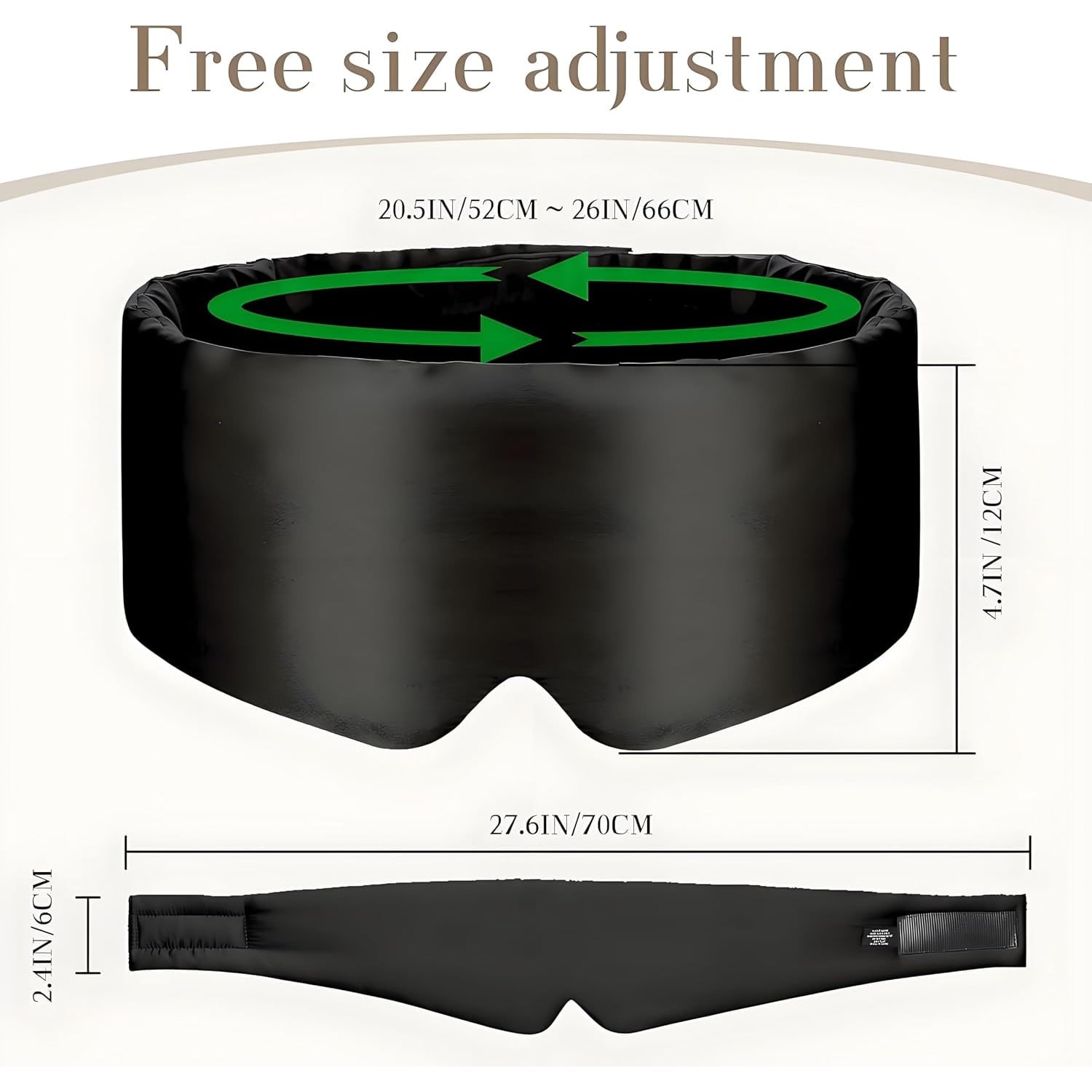
This mask uses the flat approach with a generous panel size, which means the coverage extends further across the cheekbones and out towards the temples than a small standard mask does.
The strap is not an afterthought
Thin elastic is the cheapest way to hold a mask on, and it causes most of the complaints. It concentrates all the tension into a narrow band, which leaves a mark and, in the worst cases, gives you a headache. It also stretches out over months until the mask slides off in the night.
A wide strap spreads the same holding force across a much broader area, so the pressure per square centimetre drops. You can usually feel the difference immediately when you swap from thin elastic to a broad band.
Hook and loop adds something else: control. You set the length you want and it stays. That is useful if you share the mask, if you wear your hair up some nights and down on others, or simply if your preference changes between a snug fit at home and a looser one on a plane. A wide strap sleep mask with hook and loop is the most adjustable combination you can get without resorting to buckles, which are uncomfortable to lie on.
One habit worth building: fasten the hooks closed whenever the mask is off. Open hook and loop finds silk, wool and hair with uncanny accuracy.
Who this suits
Travellers get the most obvious benefit. Cabin lighting is unpredictable, your neighbour's reading light is not yours to control, and a mask that folds flat into a pocket weighs almost nothing. A good silk eye mask for travel is one of the few pieces of kit that earns its space every single trip.
Shift workers are the other group who notice a big change. Daytime light is brighter and comes from more angles than night light, so a larger mask with the nose area handled properly does far more than a small one.
Then there are the people who simply live somewhere with thin curtains, an early sunrise, or a street lamp outside the bedroom window. You can replace the curtains, or you can wear a mask. One of those options costs considerably less.
It is also a straightforward gift. There is no sizing to guess, no colour to match, and black suits everyone. Parents of young children, students in shared housing and anyone who works nights all tend to appreciate it.
Looking after it
Silk rewards gentle handling and punishes the washing machine. Hand wash in cold water with a small amount of mild detergent. Swirl it, do not scrub it. Rinse until the water runs clear, then press the water out between two layers of towel. Never wring or twist, because that stresses the fibres along a crease line.
Dry it flat, away from radiators and out of direct sunlight. Heat and strong sun both dull the surface over time and can fade dark colours. Keep the hook and loop strap fastened throughout, both in the wash and in the drying, so the hooks cannot snag the silk face.
Wash it every week or two with normal use. If you apply creams or oils at night, or if the room runs warm, wash it more often. Store it somewhere it will not get caught on zips or hooks, ideally a small cloth bag or a zipped pocket.
The short version
A sleep mask only works if you keep wearing it, and you only keep wearing it if it is comfortable. This one covers the three things that usually go wrong. The silk is 100% mulberry at 19 momme, so it is smooth and dense enough to be properly opaque. The nose section is shaped, so the usual light leak is much smaller. The strap is extra-wide with hook and loop, so it adjusts precisely and does not cut into the back of your head.
Wash it by hand in cold water, dry it flat, keep the hooks closed when it is not on your face, and it will stay soft for a long time. Delivery is tracked and takes 3 to 7 working days, and you have 14 days from delivery to change your mind.