
The complete guide
How to Choose a Silk Bonnet, and Why Momme Weight Matters
The problem with sleeping on cotton
Most of us spend a third of the day with our head pressed into fabric, and we barely think about what that fabric is doing. Cotton pillowcases have a textured surface. Under a microscope it looks like a field of tiny loops and fibres. Hair dragging over that, hour after hour, catches and pulls. You turn over, the hair stays put for a split second, then it drags.
That is where the frizz comes from. That is why a style you spent twenty minutes on in the evening looks like something else entirely by breakfast. It is not that cotton is a bad fabric. It is just not a smooth one.
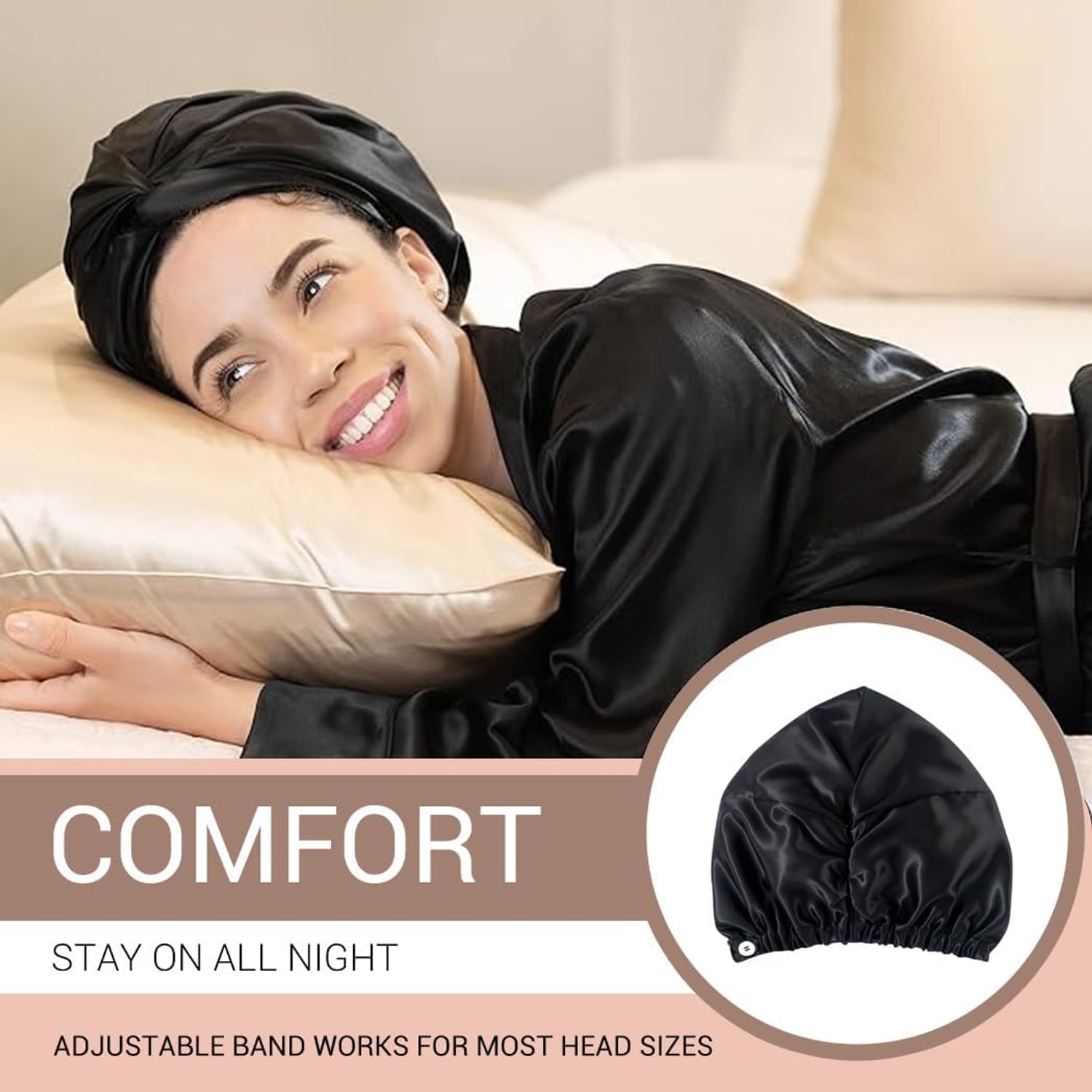
A silk bonnet solves it from the other direction. Instead of changing the whole bed, you wrap the hair itself in something slippery and let the pillowcase do whatever it likes. For a lot of people that is the simpler fix, especially if you share a bed or you move house or travel often. A bonnet packs flat. A set of silk bedding does not.
What momme actually tells you
If you have shopped for silk before you will have seen the word momme and probably skipped past it. It is worth understanding, because it is the single most useful number on a silk product.
Momme is a weight measure. It describes how heavy a given area of the fabric is, which in practice tells you how dense the weave is. Thin, flyaway silk might be 12 or 16 momme. Bedding and sleepwear usually sit somewhere between 19 and 25. Above that you start getting into fabric that is heavy enough to feel stiff.
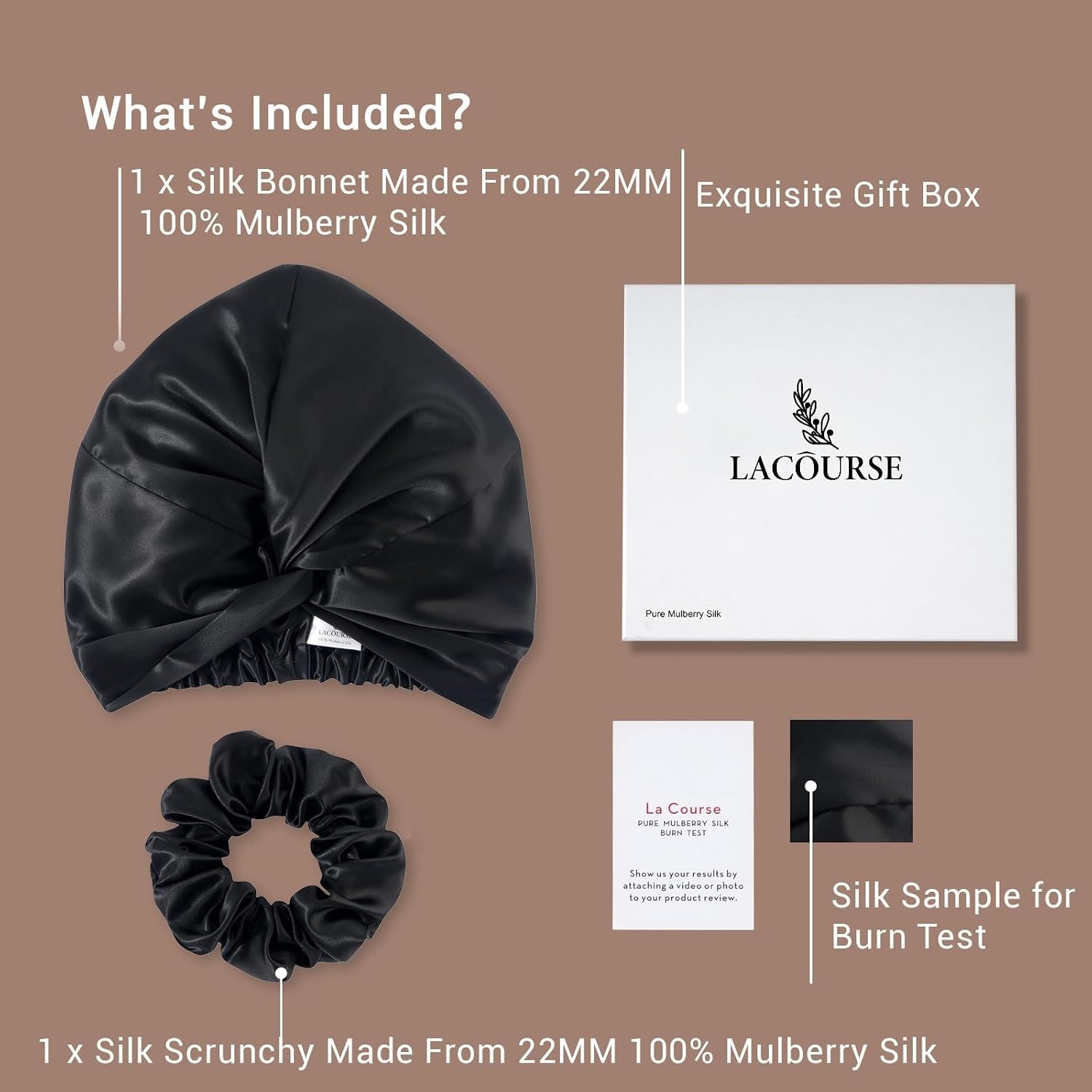
This bonnet is 22 momme. That lands in the upper part of the normal range for sleep products. The practical effect is that the fabric has some substance when you hold it. It does not feel papery, it does not feel like it will snag on a fingernail, and it drapes properly rather than floating about. If you are comparing options and trying to work out which is the best 22 momme silk bonnet for you, the momme figure gets you past the first round of filtering. Anything much lighter is a different kind of product.
Why the double layer is the detail to check
Here is a thing that catches people out. Plenty of bonnets described as silk are silk on the outside only. Inside, where your hair actually sits, there is a polyester or satin lining. The outside is the bit the camera sees. The inside is the bit that does the work.
This one is two layers of mulberry silk, so the interior surface is the same fibre as the exterior. That is the whole point of buying silk for hair. The smooth surface needs to be touching the hair, not facing the ceiling.
The second thing the double layer gives you is a bit more structure. A single thin layer tends to collapse and cling. Two layers of 22 momme hold a shape, which means the bonnet sits over the hair rather than squashing it flat against the scalp. If you wear curls, that difference is noticeable in the morning.
Mulberry silk, for what it is worth, is simply silk from silkworms raised on mulberry leaves. It produces longer, more uniform fibres than other silk types, which is why it has become the standard for bedding and clothing. Anyone hunting for the best mulberry silk bonnet is really asking for that long-fibre consistency.
Getting the fit right
A bonnet that falls off is worse than no bonnet, because you wake up with half your hair loose and half of it still tucked away. Fit is not a minor feature here, it is the thing that determines whether you keep using it.
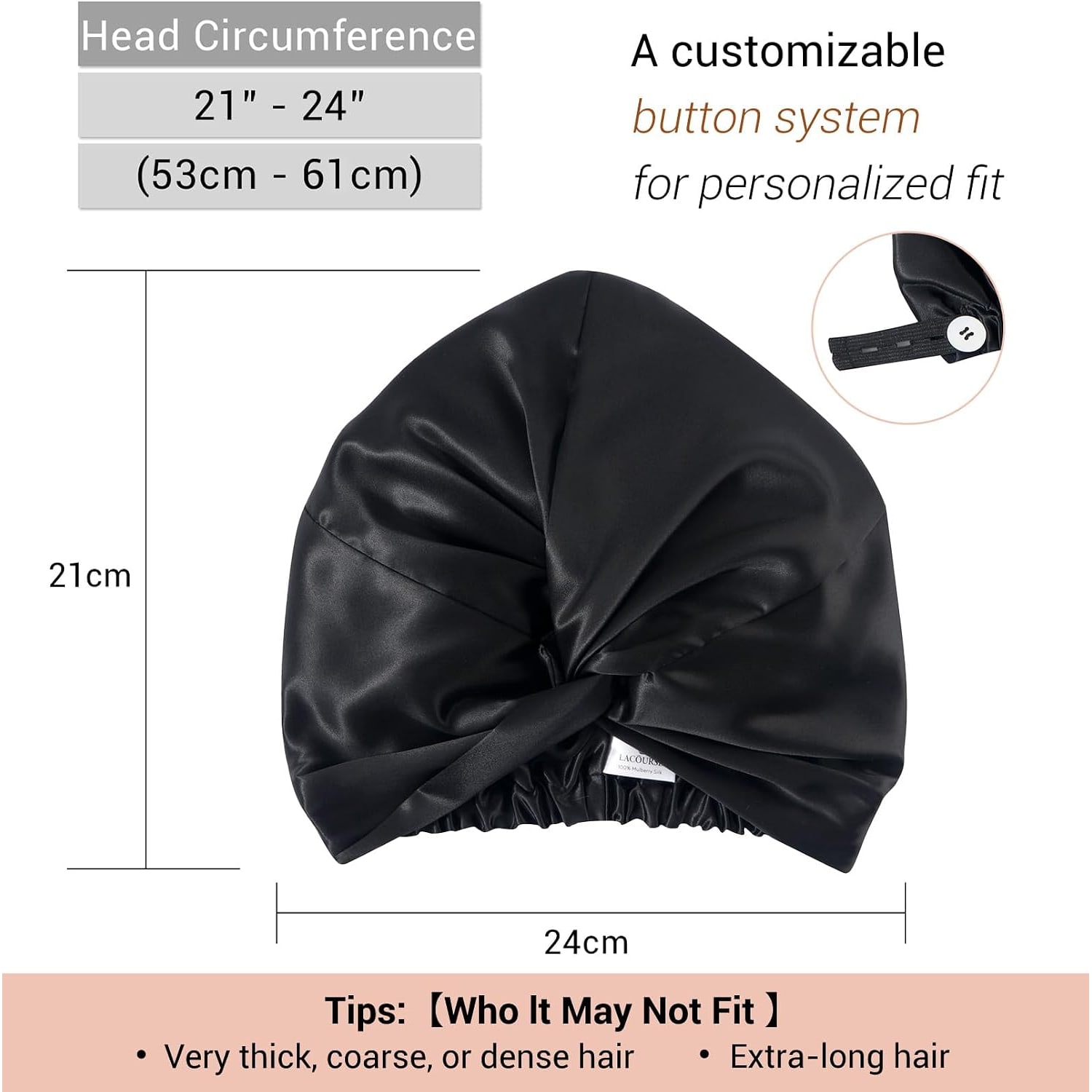
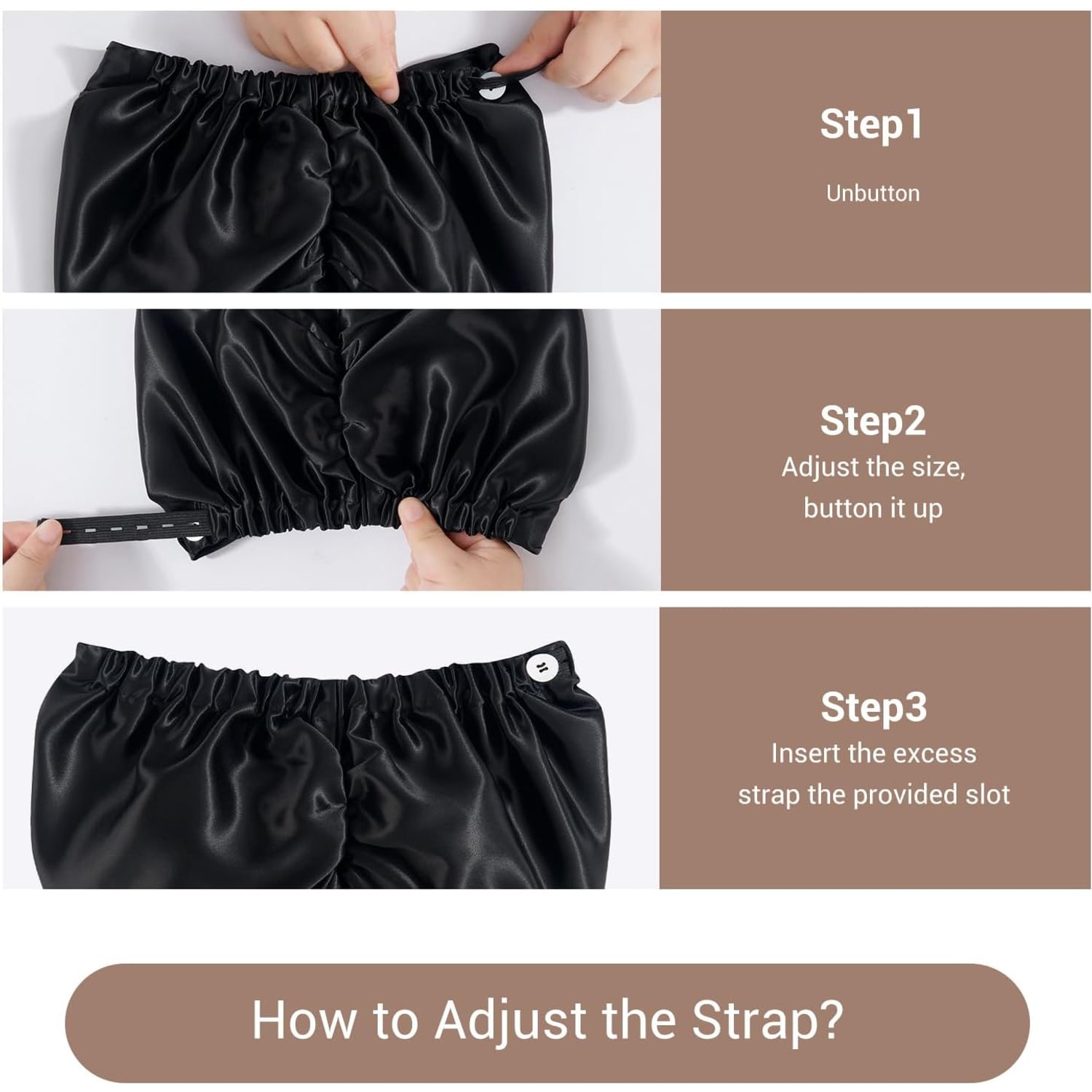
This cap has an adjustable closure. You set the tension yourself rather than hoping a factory elastic happens to match your head. Pull it snug enough that a shake of the head does not shift it, but not so tight that you can feel a line on your forehead in the morning. If you can feel pressure when you put it on, it is too tight, because you will feel it a lot more at 4am.
Laid flat the bonnet measures around 26 x 24 cm, which is about 10 x 9.5 in. That covers short hair through to long, and the maker specifically mentions curls and waves as suitable. What it is not built for is very thick or very voluminous hair. If you currently use an oversized or extra-roomy cap and it is full by the end, this is probably the wrong size for you. The honest advice is to measure what you already own across the flat before ordering. An adjustable band solves head size, not hair volume.
A useful habit if your hair is on the longer side is to gather it loosely on top of your head before the bonnet goes on, rather than leaving it at the back. The included scrunchie is there for exactly that. A loose pineapple on top keeps length off your neck and fits more comfortably inside the cap.
The scrunchie is not just a freebie
Hair ties are quietly responsible for a lot of damage. A tight elastic with a metal crimp creates a pressure point, and over months of daily use that point weakens. A silk scrunchie spreads the tension over a wider area and has the same low-friction surface as the bonnet.
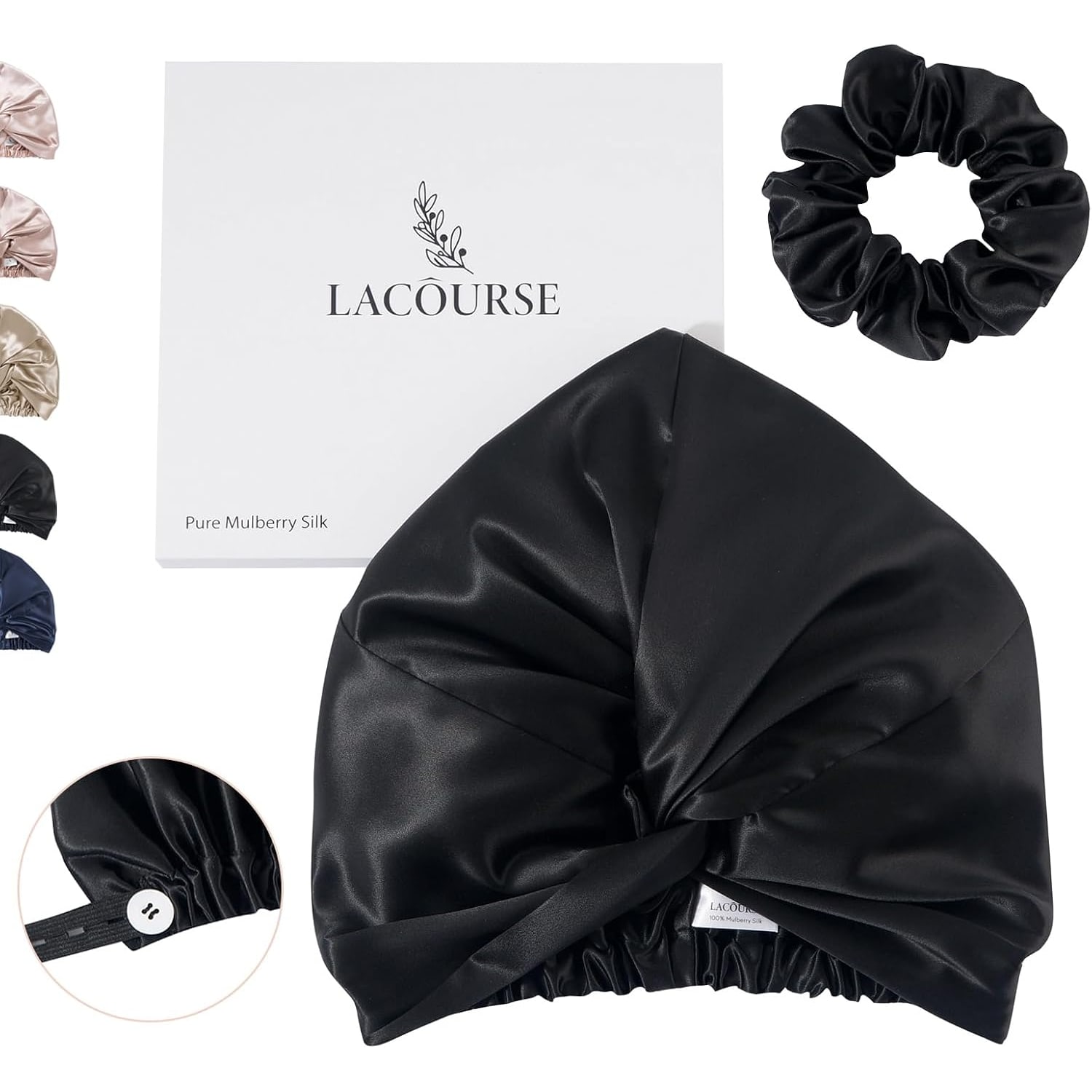
The one included here matches the bonnet in black. Use it for the nightly bun, then keep it on your wrist during the day. People who go looking for the best silk scrunchie for thick hair are after the same qualities, a wide band and a smooth surface, and having one bundled in means you are not buying it separately.
Looking after it
Silk has a reputation for being fussy. It is really not, you just have to stop treating it like a tea towel.
Wash in cool water with a detergent made for delicates. Hand washing is gentlest, but a cold delicate machine cycle inside a mesh laundry bag works fine and is what most people end up doing. Skip the bleach entirely and do not leave it soaking.
When it comes out, press the water through it. Do not twist and do not wring. Then dry it flat or hang it somewhere with air movement, well away from radiators and direct sunlight. Heat is what damages silk fibres, far more than washing does. If it needs pressing, the lowest silk setting on the reverse side, with a cloth in between, will sort out any creasing.
How often you wash depends on you. Every week or two suits most people. If you apply oils, creams or leave-in treatments before bed, wash it more frequently, because the fabric picks that up and it builds.
Who this suits, and who it does not
This is a good match if you have short to long hair, if you have curls or waves, if your current pillowcase is leaving you with morning frizz, or if you want something you can throw in a bag for a weekend away. The plain black is easy to live with and does not shout.
It is less of a match if you have very thick or very big hair, because the maker is clear that it is not built for that volume. It is also not the right product if you want full bedding coverage rather than a cap. Some people prefer a silk pillowcase for that reason, and both approaches have their fans.
The short version
Two layers of 100% mulberry silk at 22 momme, which is a proper weight rather than a token one. Silk on the inside as well as the outside, so the smooth surface is where it needs to be. An adjustable band so you set the fit yourself. One size, around 26 x 24 cm flat, suited to short through long hair including curls and waves, but not for very thick hair. A matching silk scrunchie in the box. Cool wash, air dry, keep it away from heat.
If you have been meaning to try a bonnet and have not got round to it, this is a straightforward place to start.