
The complete guide
How to Choose a Silk Sleep Mask That You Will Actually Keep Wearing
The problem is rarely total darkness
Most people who buy a sleep mask are not living next to a floodlit car park. They are dealing with small leaks of light. A gap where the curtain meets the wall. A charging light on a laptop. A partner who reads until midnight. Summer sunrises that arrive at half four and land straight on your face.
Those small leaks matter because your eyelids are thin. Light gets through them even when your eyes are shut, and your body reads that light as a cue to wind the night down early. Blackout blinds fix it at home, but they cost money, they need fitting, and they do nothing for you in a hotel, on a plane or on a friend's sofa.
A mask is the portable version of a blackout blind. The whole question is whether you will still be wearing it in three months, or whether it will be in the drawer with the one that pinched.
Why the fabric decides whether you keep it
Cheap masks are usually a layer of polyester jersey over foam. They work on night one. The trouble shows up later. The fabric warms up against your face, the foam compresses into a flat biscuit, and the elastic either bites or slips.
Silk behaves differently. It is a smooth, fine fibre, so it has less drag across skin and hair than a brushed cotton or a jersey knit. You notice this when you turn over. Instead of the mask gripping your face and pulling, it slides and settles. It is also a light fibre that does not trap heat the way a synthetic face does, which is the main reason people switch after one hot summer.
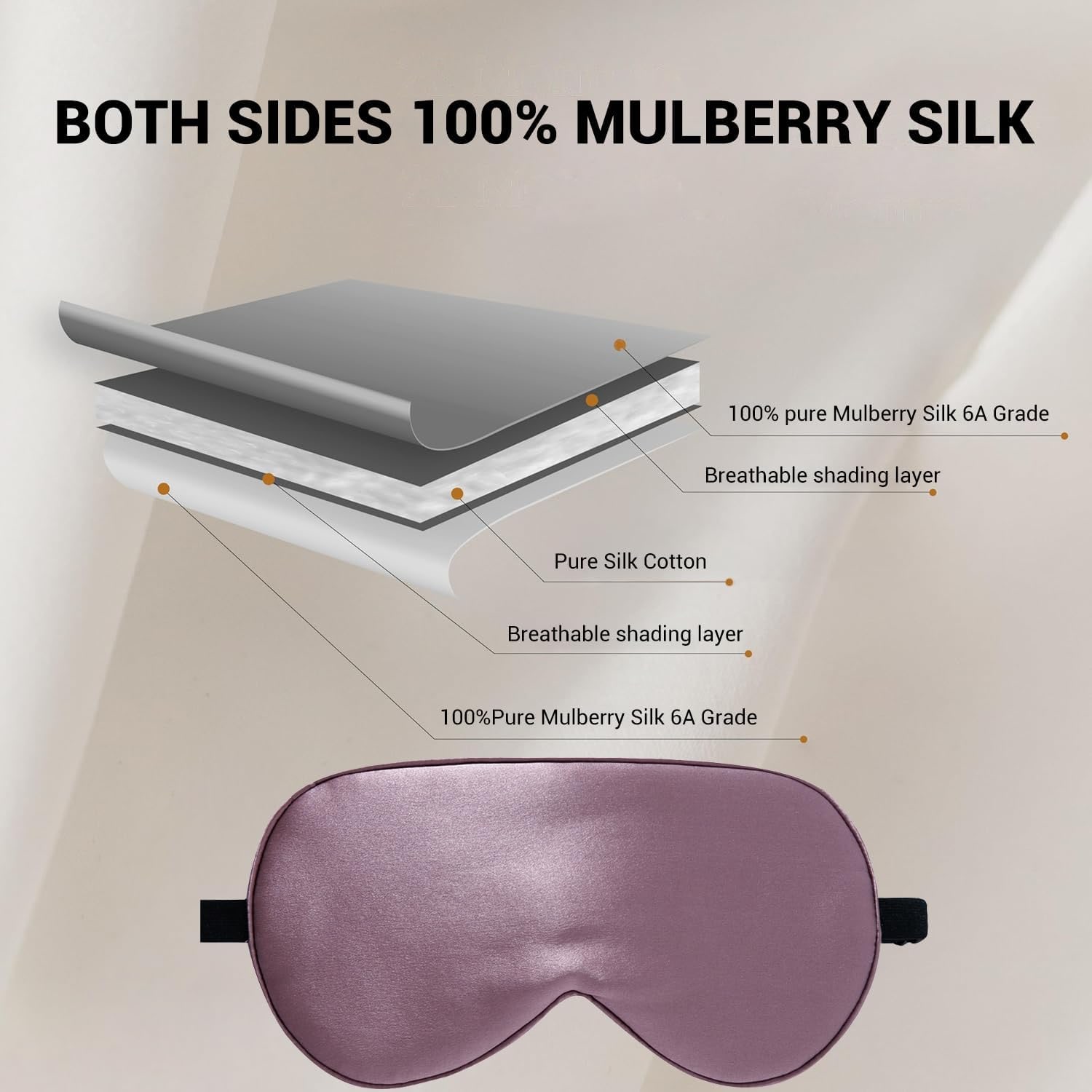
Mulberry silk is the type you see most often in bedding and masks. It is a long fibre, which is what gives it that even, continuous surface. This mask uses it on both faces, inner and outer. That sounds like a small detail and it is not. Plenty of masks sell themselves on silk while backing it with a cheaper fabric, so the side touching your eyelids is the one that cost the least. Both sides silk means there is no rough face at all, including the edge where the two layers meet.
What the padding actually does
Between the two silk faces sits cotton padding. People skim past this line, but it does most of the comfort work.
Without padding, a silk mask is two thin layers of fabric. It drapes straight onto your eyelids and lashes, and every bit of strap tension lands directly on your eye sockets. With padding, the mask has structure. It holds the fabric a fraction off the lids, it spreads the pressure across a wider area of your face, and it gives the mask enough body to sit against the contours around your nose and cheekbones rather than tenting over them.
Cotton is a sensible choice for a filling. It is breathable and it does not have the dead, springy feel of thick foam. It also compresses when you roll onto your side, which is exactly what you want if you sleep with half your face in the pillow.
The strap is where most masks fail
Look at any pile of abandoned sleep masks and the fault is usually the strap. Either it was sewn at one fixed length, or it was a thin band of elastic that lost its stretch after thirty washes.
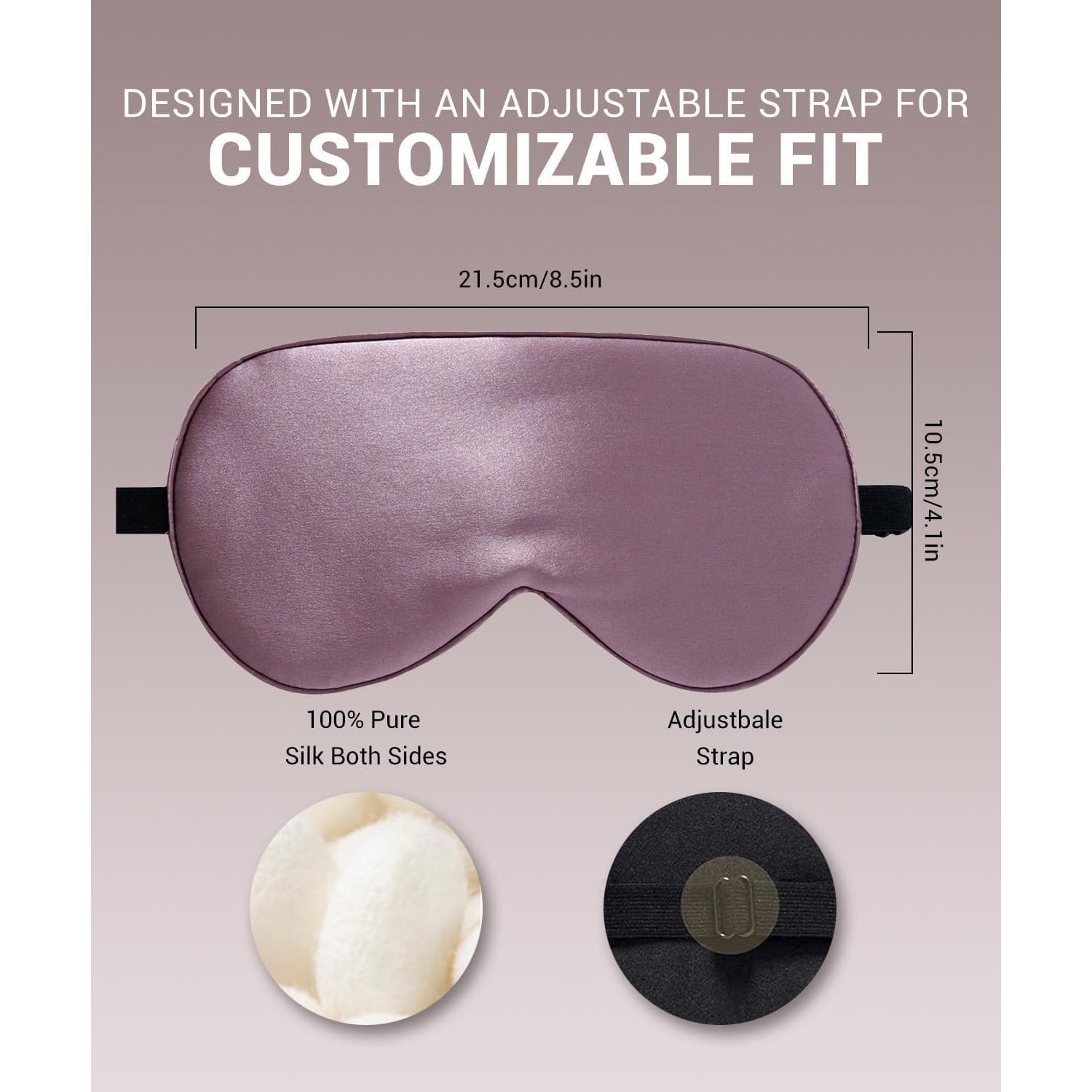
This mask uses an adjustable buckle. You thread the strap to the length that suits your head and it stays there. Three things follow from that.
First, you can set it loose. A lot of people wear masks too tight because they think tight means darker. It mostly means a headache and a line across your forehead. A buckle lets you find the point where it is dark enough and light enough at the same time.
Second, it survives washing. The buckle does not care how many times the mask goes through a basin of cool water, whereas elastic slowly gives up.
Third, two people can share. Set it for one head, reset it for another, no stretching required.
The practical check is where the buckle sits on your head. Shift it so it rests above or below where your ear meets your skull, rather than directly behind your head if you sleep flat on your back. A low profile buckle like this one rarely causes trouble, but five seconds of positioning helps.
Who this suits
Side sleepers do well with a padded silk mask because it squashes down against the pillow without losing coverage. Back sleepers get the easiest fit of all, since nothing pushes the mask out of place.
Front sleepers are the tricky group. If you sleep face down with your head turned, a mask can rub on the cheek that is against the pillow. A softer padded mask like this one is more forgiving than a stiff contoured one, but it is worth a few nights to know.
Travellers get the most obvious benefit. A silk sleep mask for travel costs you nothing in luggage space and turns a middle seat or an airport lounge into somewhere you can actually doze. Shift workers are the other big group. Sleeping through daylight is hard, and a mask plus a decent pair of earplugs does more than most people expect.
It also works as a gift. An adjustable strap removes the sizing problem, the grey purple is a shade that suits most bedrooms, and silk reads as a small luxury without being an extravagant spend.
How to choose between masks
A few honest questions sort it out quickly.
Do you want contoured or flat? Contoured masks have moulded cups and give you space to blink. They are bulkier and they do not pack as flat. Flat padded masks like this one sit closer and travel better. If you have lash extensions or you blink a lot as you fall asleep, contoured may suit you better.
Do you want elastic or a buckle? Elastic is quicker to put on. A buckle holds its setting and lasts longer. For a mask you expect to use nightly for years, the buckle wins.
Do you mind hand washing? Silk needs it. If you want to throw it in the machine with the towels, buy cotton instead and accept the friction. If two minutes in a basin every fortnight is fine, silk is the nicer thing to wear.
Is the silk on both sides? Check this on any mask you compare. It is the single most common place corners get cut.
Looking after it
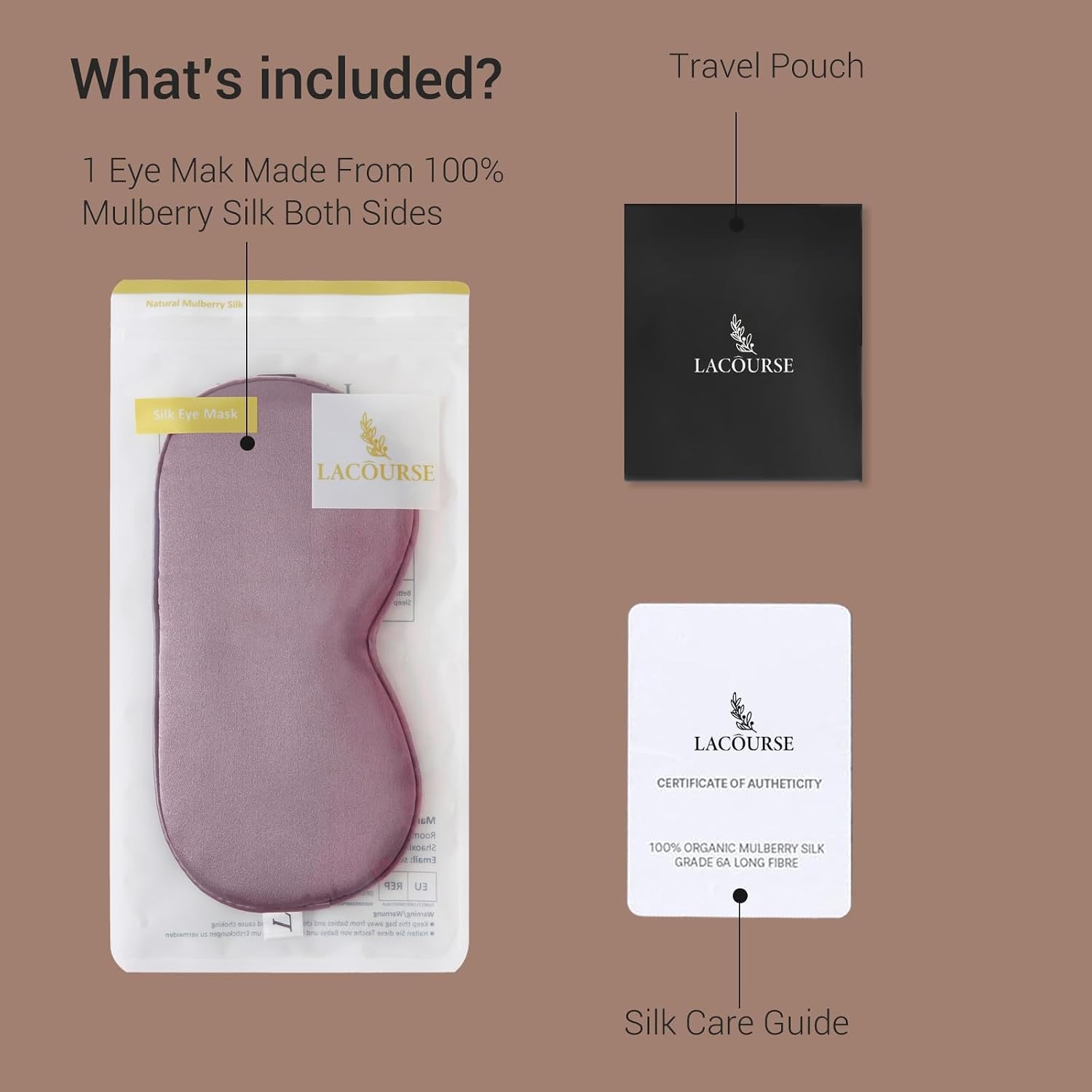
Hand wash only, in cool water, with a small squeeze of gentle detergent. Swish it rather than scrub. Rinse until the water runs clear.
Never wring silk. Lay the mask flat on a clean towel, roll the towel, press, then unroll and leave it flat to dry. Keep it away from radiators and off a sunny windowsill, because heat and strong sun are what dull the colour and weaken the fibre.
No bleach, no tumble dryer, no hot iron. If it needs smoothing, a cool iron on the reverse or a few minutes in a steamy bathroom will do.
If you wear night cream or serum, give it a quarter of an hour to soak in before the mask goes on. That alone will cut your washing frequency in half.
The short version
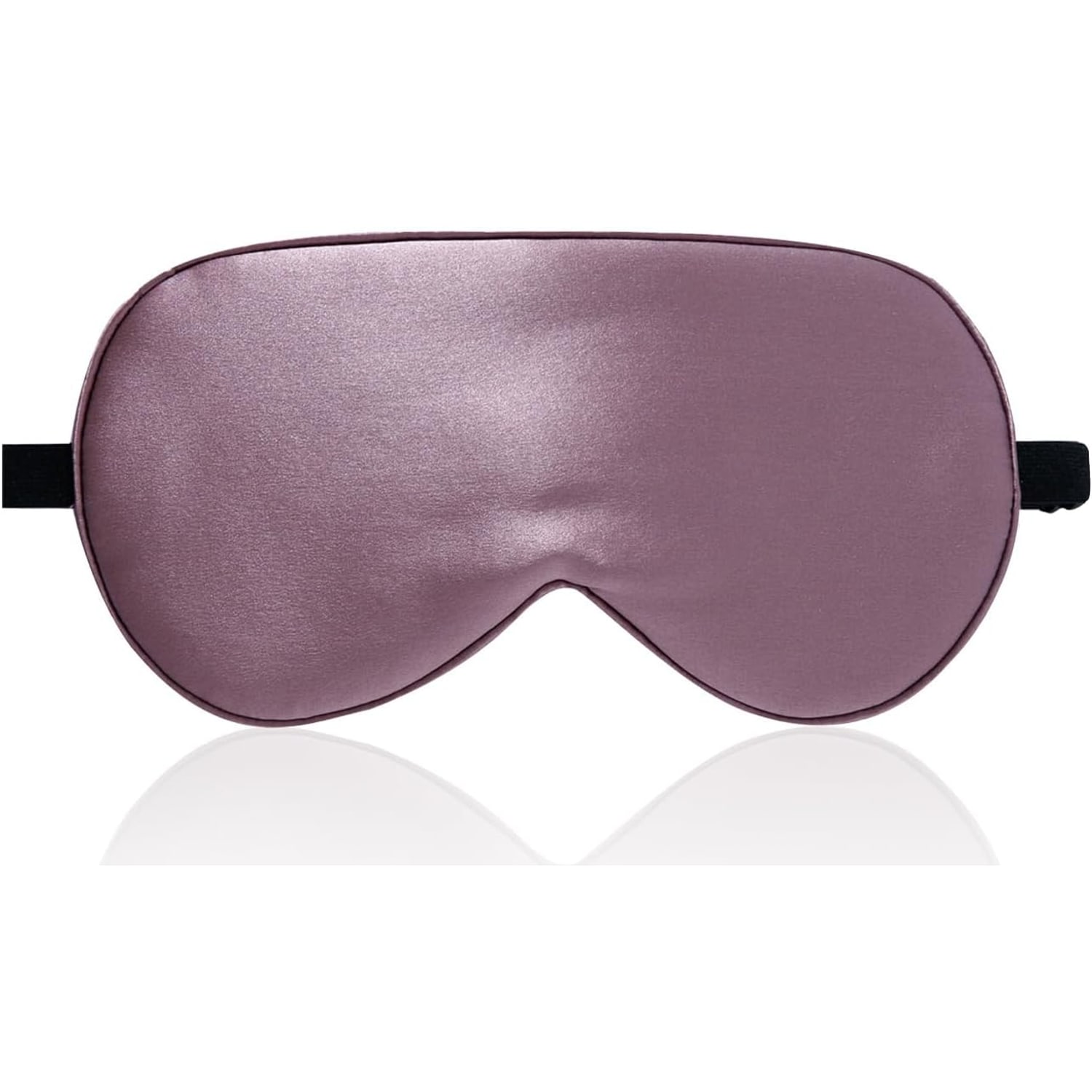
This is a grey purple mask with mulberry silk on both faces, cotton padding inside and a buckle strap that adjusts to your head. Silk is smooth and light, so there is less drag against skin and hair than cotton and less heat than synthetics. The padding keeps the fabric off your lashes and spreads the pressure. The buckle holds its setting instead of stretching out.
It needs hand washing, which is the one piece of upkeep. In return you get a mask that still looks and feels right a long way down the line, whether it lives on your bedside table or permanently in a carry on bag.