
The complete guide
How to Choose a Contoured Silk Sleep Mask That Actually Blocks Light
The problem with most sleep masks
Most people buy a cheap eye mask, use it twice, and quietly retire it to a drawer. The reasons are always the same. It presses on the eyelids. Light sneaks in beside the nose. The elastic tangles hair or digs a line into the back of the head. By three in the morning the thing has ridden up onto the forehead and you are awake anyway.
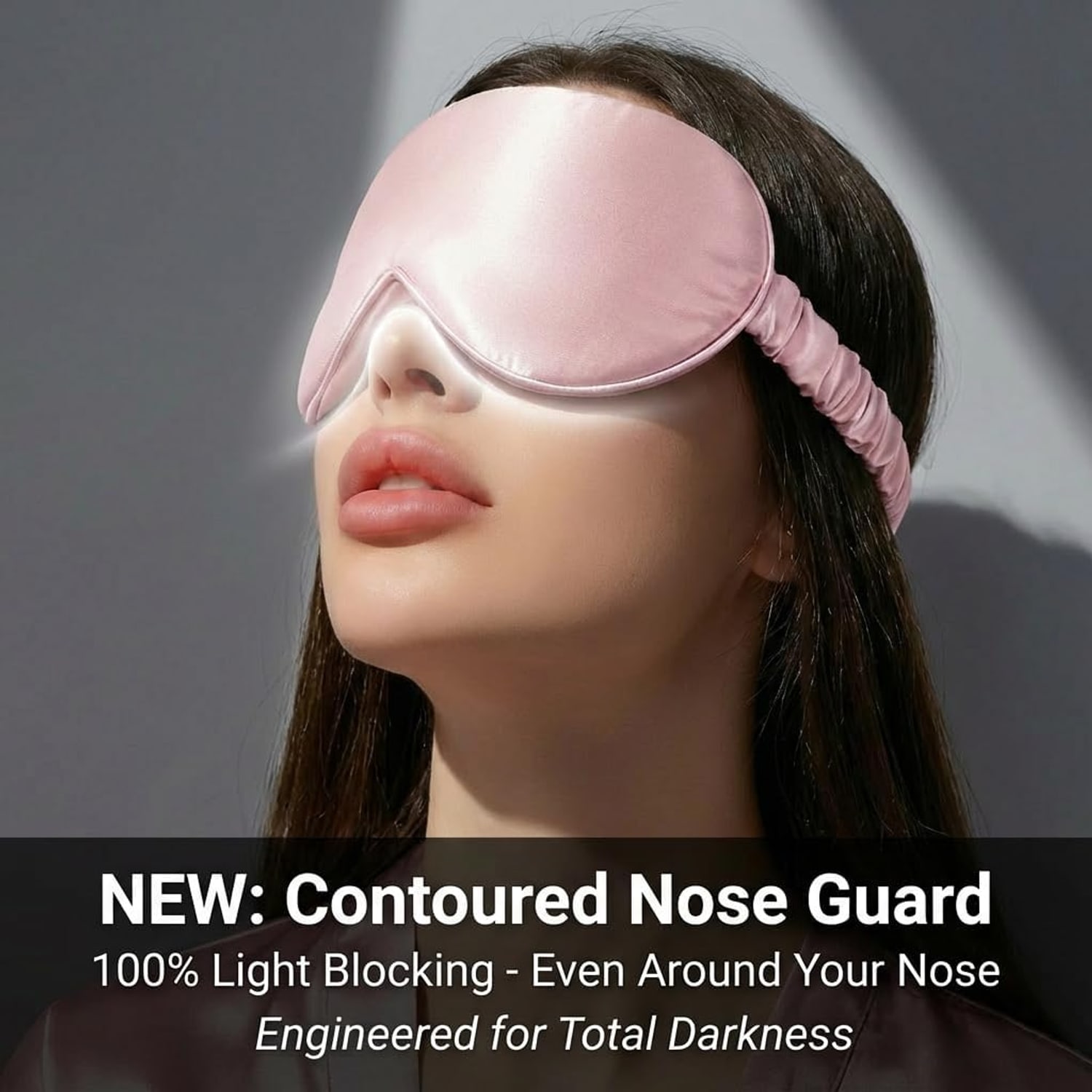
None of those problems are about silk or satin or padding. They are about shape and fit. A flat rectangle of fabric cannot follow the contours of a human face, because a human face is not flat. The bridge of the nose is the highest point, so a flat mask tents over it and leaves two open triangles underneath. Meanwhile the lowest points, the closed eyelids, take all the contact and all the pressure.
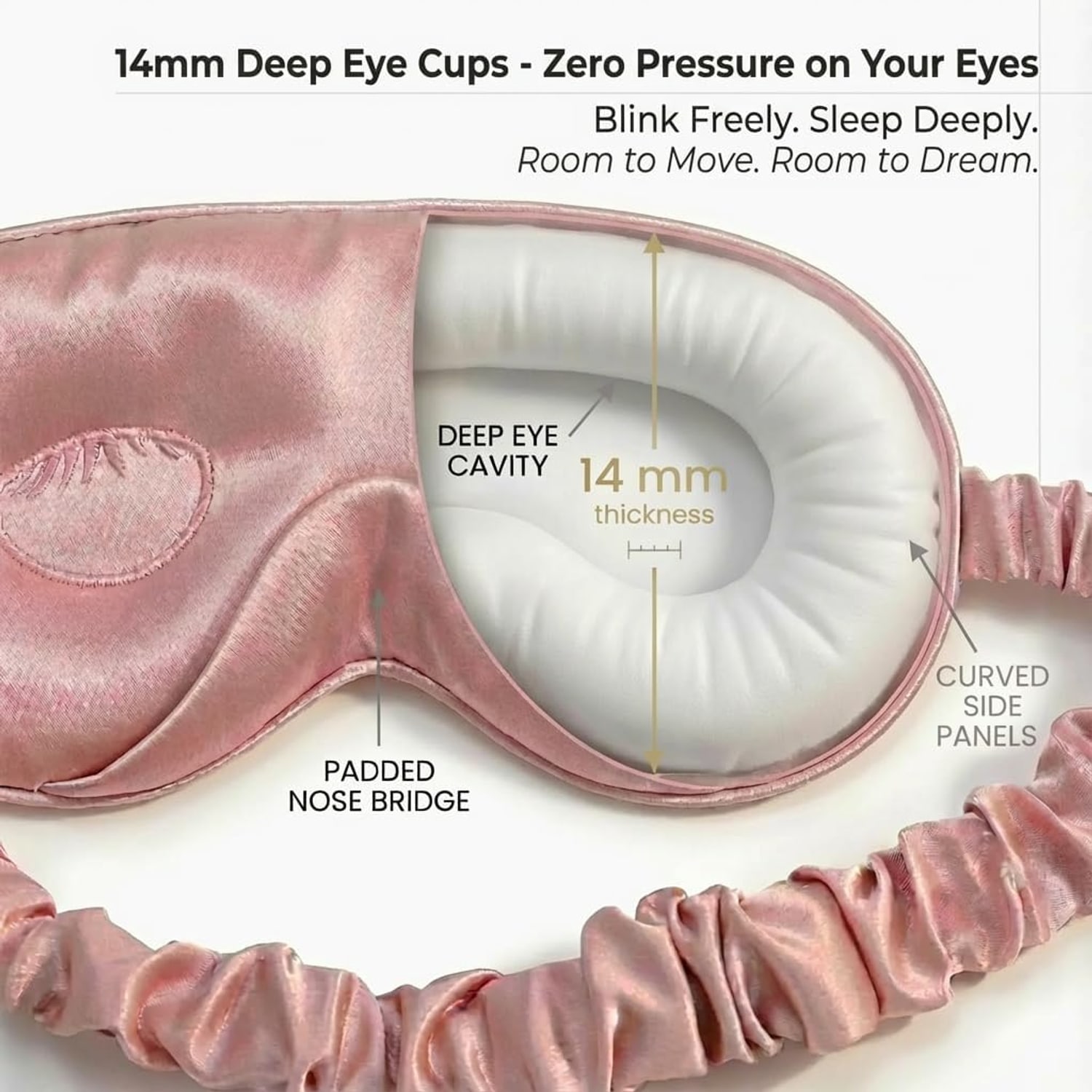
A contoured mask solves the geometry first. The cups are moulded with real depth, in this case 14 mm, so the silk arches over the eyes instead of resting on them. The nose section is shaped rather than straight. The sides curve back toward the cheek and temple. Suddenly the mask is sealing along the bone, where sealing actually works, and touching nothing that needs to move.
What momme means and why 22 is the number to look for
Silk is sold by momme, not thread count. It is an old weight measure, and in simple terms it tells you how much silk is in a given area of cloth. Lightweight silk scarves might sit around 12 to 16 momme. Bedding and masks usually run from 19 upward.
At 22 momme you get a fabric with genuine substance. It drapes rather than flutters, it holds a smooth surface, and it feels cool and slippery under your fingers rather than thin. For a sleep mask that weight does two useful things. It gives the material enough density that stray light does not pass through it easily, and it gives the moulded cups something solid to hold their shape with.
The other half of the description is mulberry silk. That refers to silk from silkworms raised on mulberry leaves, which produces long, even filaments and a smoother finished cloth than shorter, more irregular fibres. Put the two together, 100% mulberry silk at 22 momme, and you have the specification most people are hunting for when they search for the best 22 momme silk eye mask.
How the contoured shape works in practice
There are three contact zones on a well-shaped mask. The brow bone above the eyes, the sides of the nose, and the upper cheek. Those are all bone with a thin layer of skin, which means they hold a seal without feeling squashed.
Between those zones the mask arches. Inside each cup there is an air pocket, which is why you can blink freely, roll your eyes under the mask, or open them entirely in the small hours without the fabric moving. That matters for anyone with eyelash extensions, anyone who finds pressure on the eyes uncomfortable, and anyone who has ever woken up seeing faint patterns because a flat mask was pushing on their lids.
The side panels do quiet work too. Light rarely comes straight at your face in bed. It comes in at an angle from a window, a hallway, a phone on charge. Curved sides that follow the temple cut that angled light down considerably, which is the difference between dim and properly dark.
Getting the strap right
The strap on this mask is covered elastic that adjusts from 46 to 66 cm (18 to 26 inches). That is a wide range, and it covers the large majority of adult head sizes.
Here is the part people skip. Set the strap before you need it, not at midnight with one hand. Pull the mask on, settle the cups over your eyes, feel for the nose section sitting flush, then tighten the adjuster in small increments until light stops reaching you when you turn your head. Stop there. Going tighter does not make it darker, it just presses the frame into your skin and leaves a mark by morning.
Silk covering on the elastic is a small detail with a real payoff. Bare elastic grabs hair, especially long or fine hair, and every turn of the night winds a few more strands into it. A silk sleeve lets the strap slide instead. If you tie your hair up, position the strap below the bun rather than across it, and the mask will sit flatter.
Who this suits
Travellers are the obvious group. Cabin lights, window blinds that never quite close, and the person two rows up watching a film with the brightness at maximum. A mask that folds flat into a bag and seals properly turns a bad flight into a survivable one.
Shift workers are the harder case. Sleeping during daylight means fighting much stronger light than any night-time scenario, and no mask alone will fully substitute for a blackout blind. A contoured mask with a shaped nose bridge gets you a long way, and used alongside curtains it does the job. Anyone searching for the best eye mask for night shift sleep should plan on that combination rather than relying on fabric alone.
Then there is the straightforward group: people who simply sleep better in the dark and want something comfortable enough to forget they are wearing. Light sleepers, people sharing a room with a partner on a different schedule, anyone in a city flat with a streetlight outside the window.
Side sleepers are often warned off masks, which is unfair. The reason flat masks fail for them is that soft fabric folds and bunches against the pillow. A moulded cup holds its own shape, so it stays put and stays comfortable. Set the strap a little looser if you turn frequently.
Caring for silk without fuss
Hand wash only. That is the instruction, and it is worth following, because washing machines are rough on both silk fibres and moulded shapes.
The routine takes about three minutes. Fill a basin with cool water, add a small amount of detergent made for delicates, and move the mask gently through the water with your hands. No scrubbing, no soaking for an hour, no bleach. Rinse in clean cool water until the suds are gone.
Drying is where masks get ruined. Do not wring it. Lay it on a clean towel, fold the towel over, and press down to draw the water out. Then reshape the cups with your fingers and lay it flat somewhere out of direct sun and away from radiators. Heat and silk do not get along. It will usually be dry by morning.
A couple of extra habits help. Take off rings and earrings before you handle wet silk, since the fibres snag on anything sharp. Store the mask flat rather than crushed under heavier items, so the cups keep their depth. And if you use rich night creams, give them a few minutes to absorb before putting the mask on, which cuts down on how often you need to wash it.
How to compare options before you buy
Four things decide whether a mask works for you. Shape, momme weight, strap range, and strap material.
Shape comes first, because a flat mask cannot compete with a contoured one for light sealing or comfort, whatever it is made from. Momme weight tells you how substantial the silk is, and anything at 19 or above is a serious fabric. Strap range determines whether it fits you properly rather than almost. Strap material decides whether you wake with tangled hair.
Padding, decorative trim and packaging are nice but they are not what make a mask work. If a listing talks a lot about presentation and very little about depth, weight and adjustment range, that tells you something.
The short version
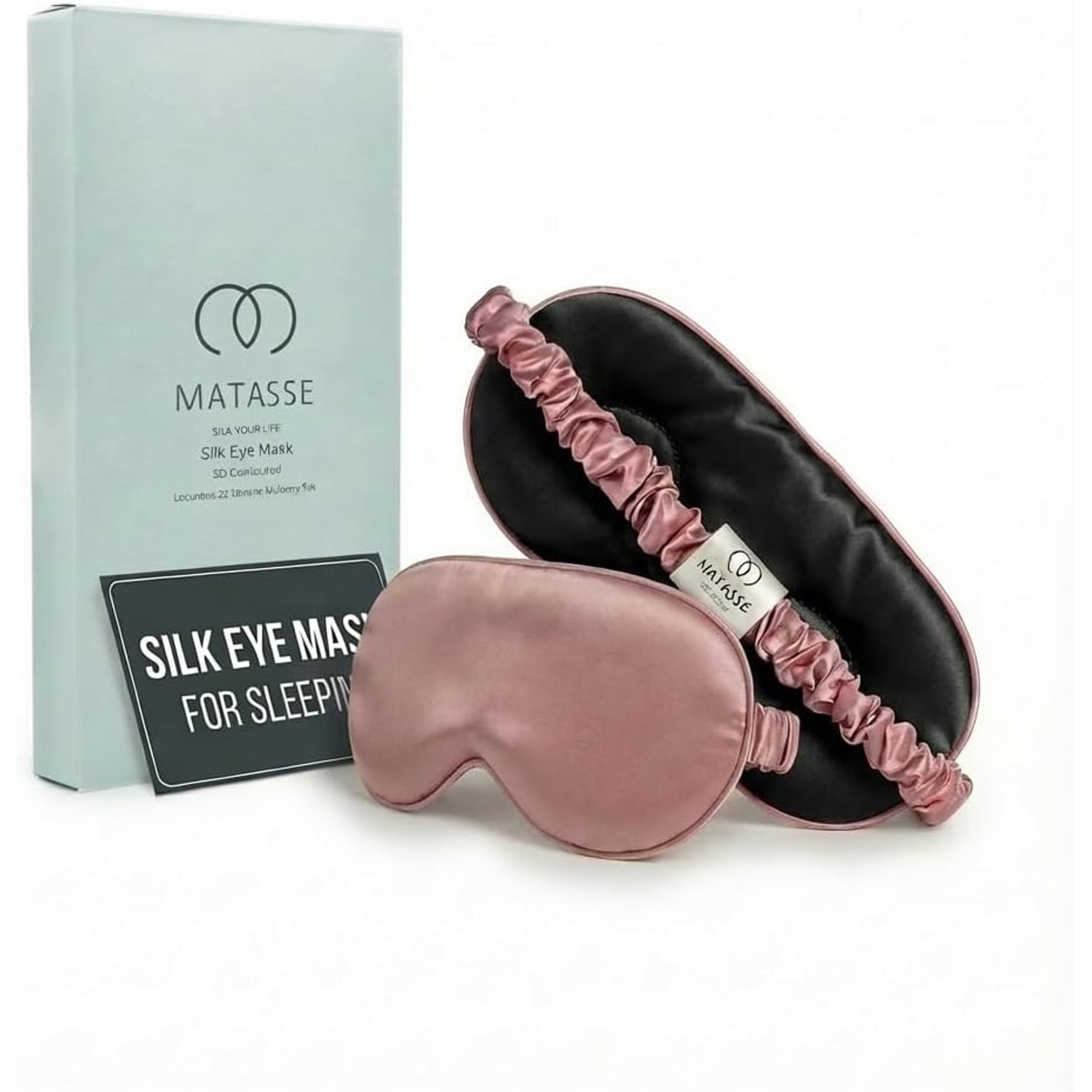
This is a 100% mulberry silk mask at 22 momme, with 14 mm contoured cups, a shaped nose bridge, curved sides and a silk-covered elastic strap adjusting from 46 to 66 cm (18 to 26 inches). It comes in pink with black detailing and it is hand wash only.
If you have tried flat masks and given up on them, the shape is the thing that changes. Nothing touches your lids, the gaps beside your nose close up, and the strap sets once and stays set. Take two minutes to adjust it on the first night, wash it by hand when it needs it, and dry it flat. That is the whole maintenance list.
Delivery is tracked and usually lands within 3 to 7 working days. If it turns out not to suit you, you have 14 days from delivery to cancel and return it.