
The complete guide
The Silk Bonnet Buyer's Guide, From Momme Weight to Fit
The problem nobody warns you about
You wash your hair, dry it, maybe style it. It looks good. Then you sleep on it and wake up with one side flattened, the ends roughed up and whatever shape you had gone completely.
That is friction. A cotton pillowcase feels smooth to your fingertips, but on the scale of a single hair strand it is a rough, absorbent surface with thousands of tiny fibre ends. Every time you turn over, your hair drags across it. Over months, that dragging shows up as frizz, flyaways and split ends. It also pulls moisture out of your hair, because cotton is thirsty.
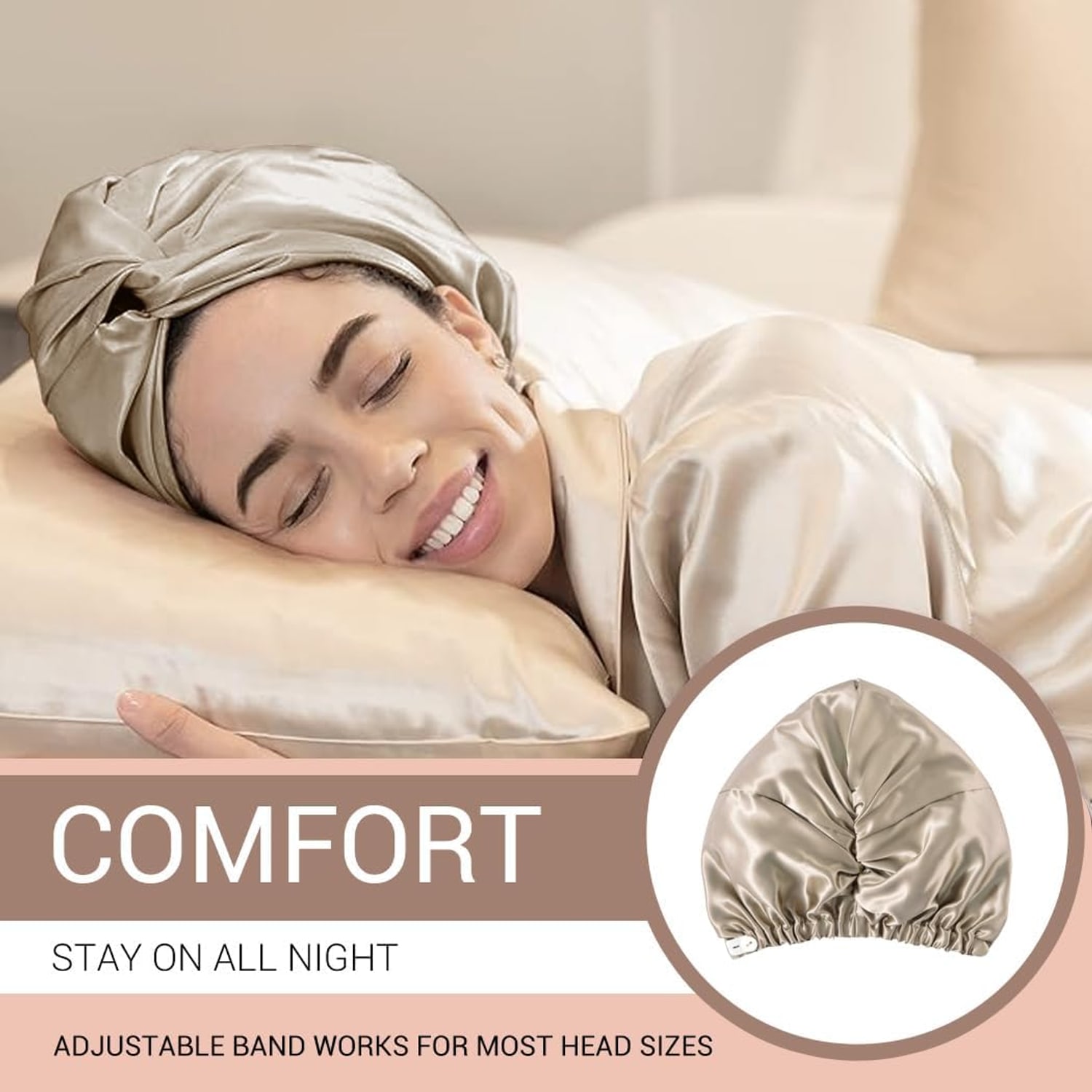
A silk bonnet solves this by putting a smooth, low friction barrier between your hair and everything else. Your hair slides. The shape you went to bed with has a far better chance of still being there in the morning.
What momme actually tells you
Momme is the unit silk is measured in, and it is the single most useful number on a silk product listing. It describes the weight of the fabric, which in practice tells you how dense and durable it is.
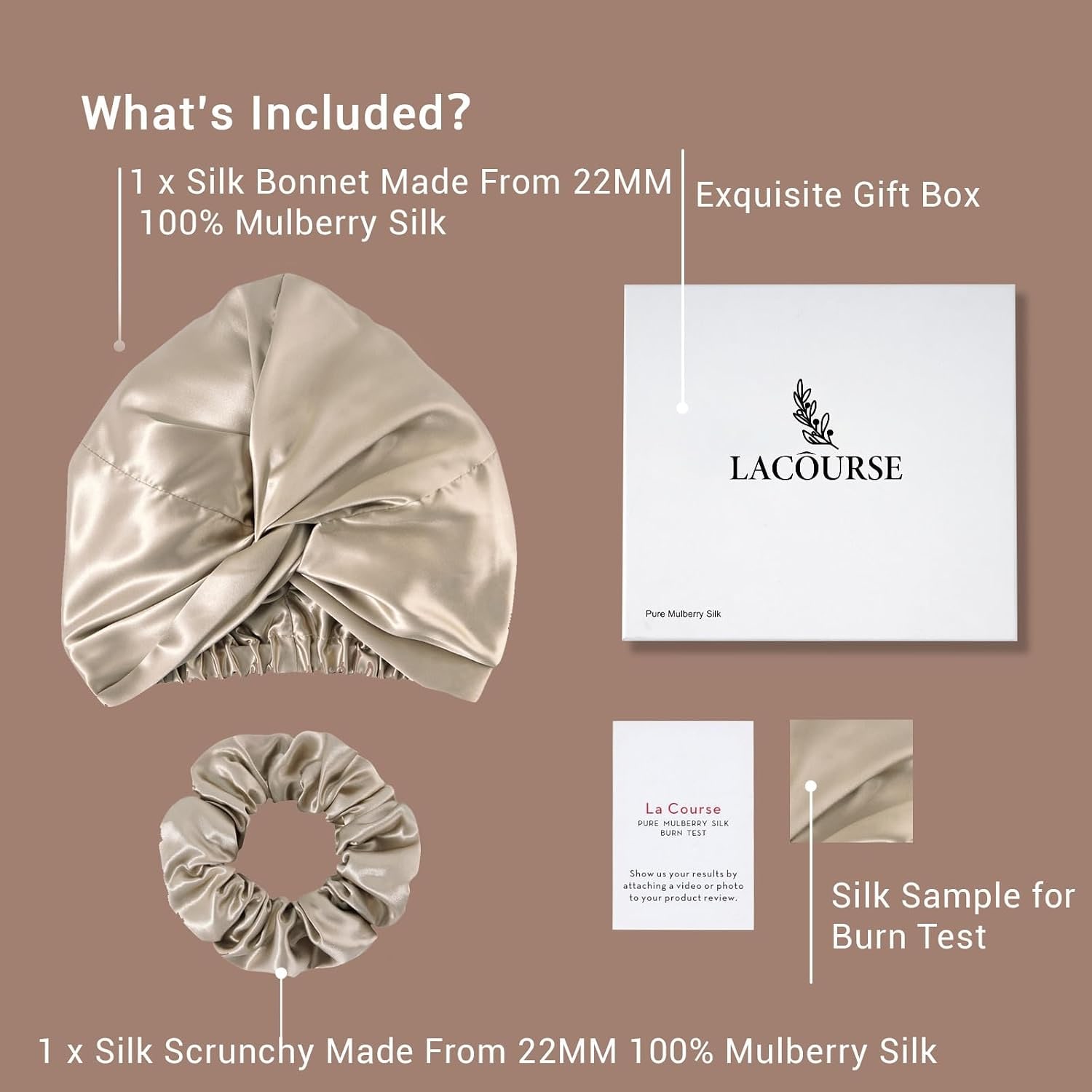
Low momme silk, around 12 to 16, feels light and slightly sheer. It is cheaper and it wears out faster. The 19 to 22 range is where most good quality silk bedding and accessories sit. At 22 momme you get silk that feels properly substantial when you pick it up, with a soft weight to it rather than a papery thinness.
That matters for a bonnet more than you might think. A bonnet gets handled every single night. It is pulled on, pushed back, scrunched up on the bedside table. Lighter silk starts to thin and snag at the band under that kind of use. A 22 momme silk bonnet has enough body to take it.
Why two layers changes things
Plenty of bonnets advertise silk and deliver silk on the outside only. Inside, where it actually touches your hair, there is cotton or polyester. That is backwards. The outside of a bonnet touches your pillow. The inside touches you.
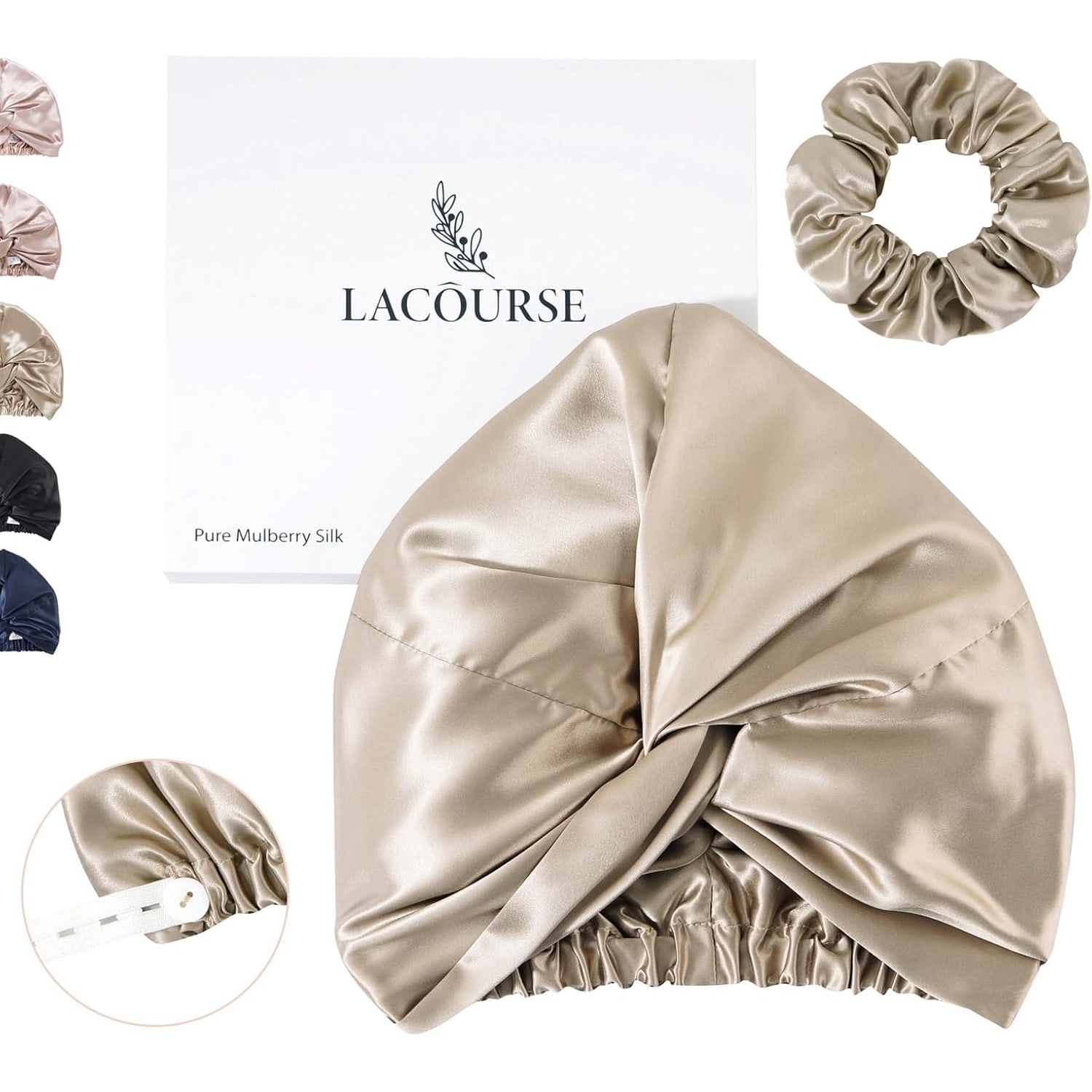
A double layer silk bonnet uses silk for both. So whichever way you look at it, your hair is against mulberry silk. The second benefit is structural. Two layers of 22 momme silk have enough body to hold a cap shape on your head instead of collapsing into a flat sheet, which means it sits better and stays put more reliably.
If you are comparing bonnets and one does not clearly state what the lining is made of, assume it is not silk. Good makers say so.
Getting the fit right
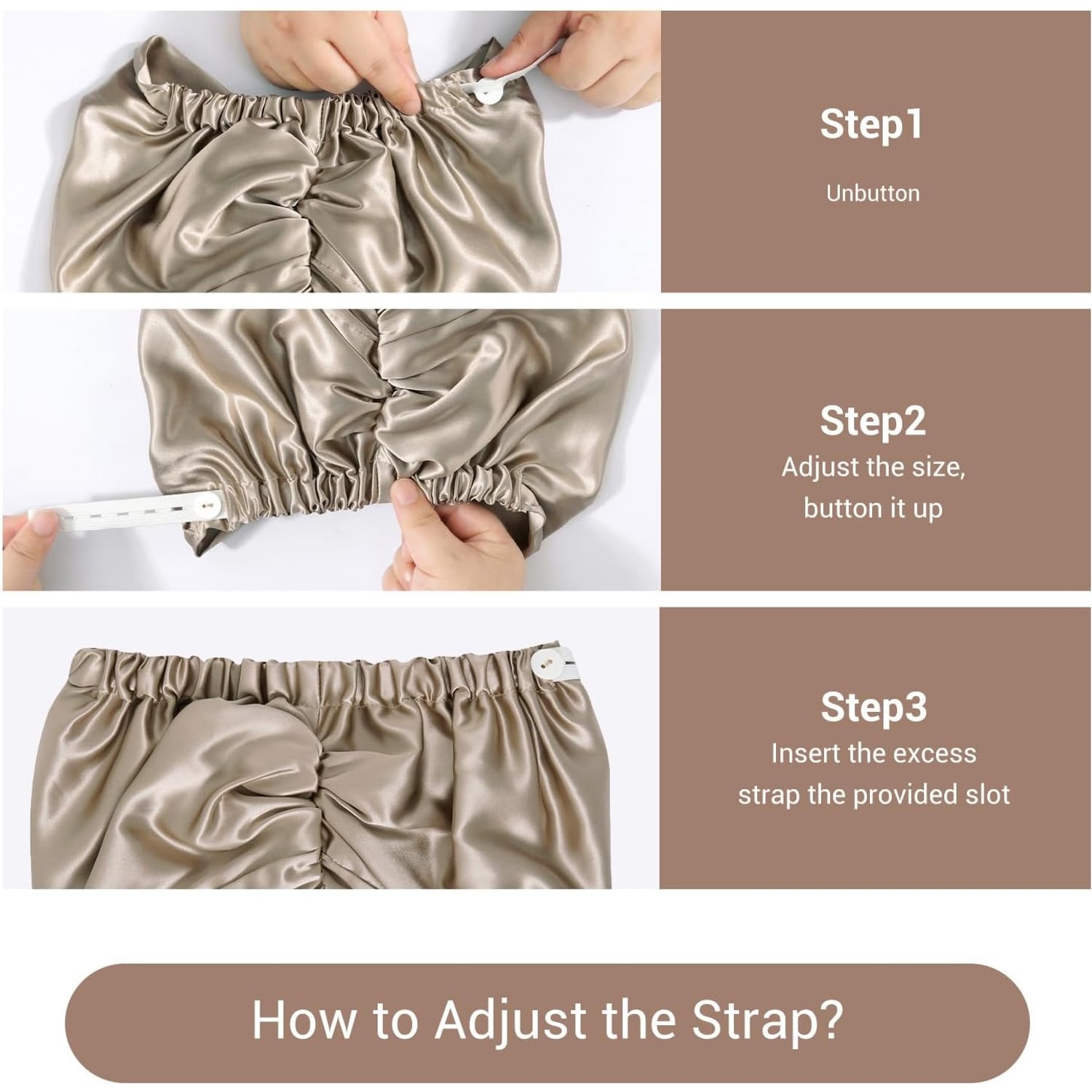
An adjustable band is the difference between a bonnet you wear every night and one you give up on after a week.
Too loose and it works its way off at some point in the small hours. You wake up with it somewhere near your feet and your hair back on the pillowcase. Too tight and you get a pressure line across your forehead and a slight headache. Neither is a good trade.
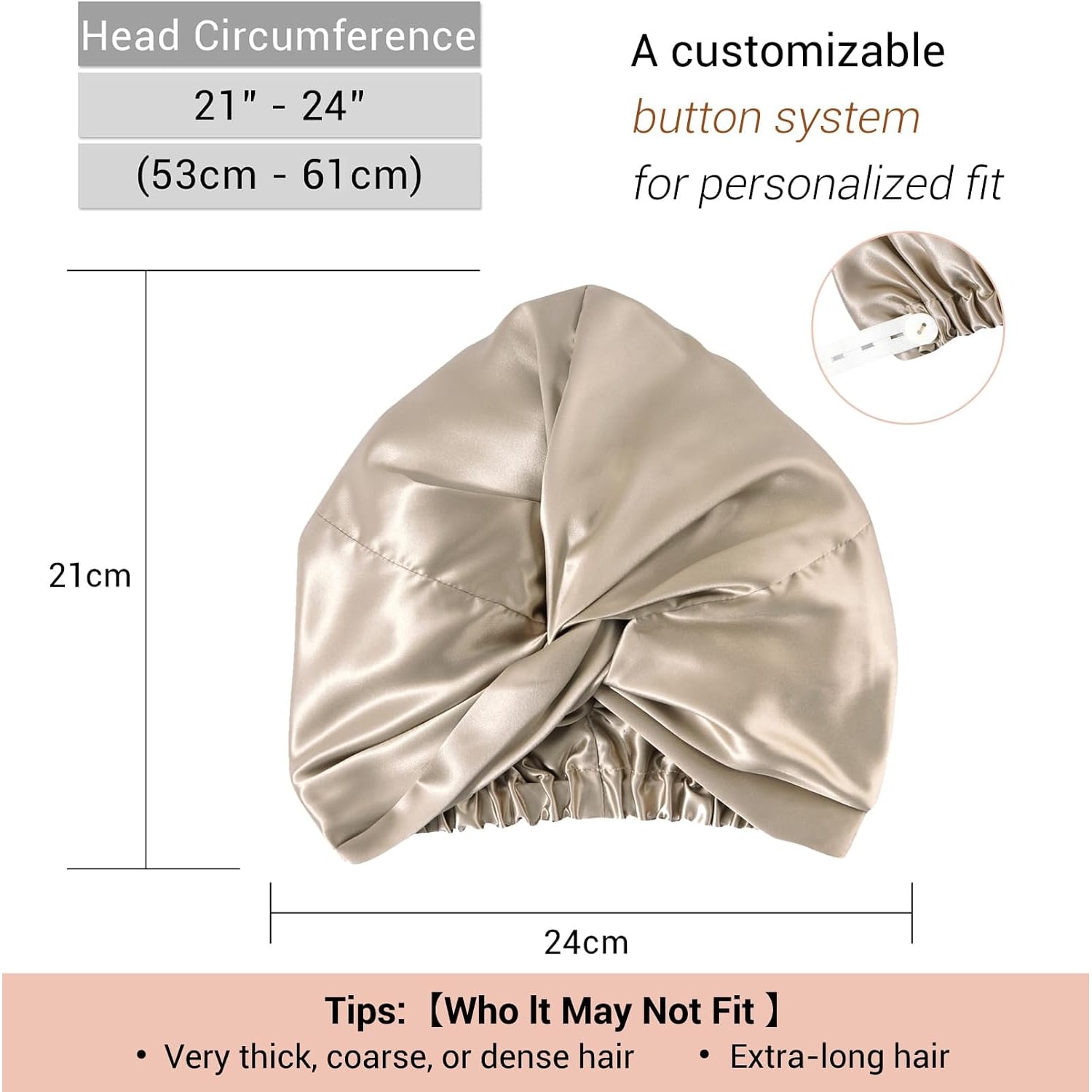
The adjustment on this one lets you set your own tension and leave it. A reasonable test is this. Put it on, then try to slide a fingertip under the band at your forehead. If it goes in easily with a little resistance, you are about right. If you have to force it, loosen off. If there is loads of room, tighten.
Fit also depends on how much hair you are tucking in. This bonnet measures roughly 26 x 24 cm (about 10 x 9.5 in) laid flat, and the maker says it suits short to long hair, curls and waves. It is not recommended for very thick or voluminous hair. That is honest guidance and worth taking seriously. If you regularly struggle to fit your hair into standard caps, you want more capacity than this.
Who it works for
Short hair benefits more than people expect. There is less length to protect, but short styles show bedhead immediately, and a silk sleep bonnet for women with cropped or bob length hair keeps the shape far tidier overnight.
Waves and curls are the classic use case. Curl pattern is fragile while you sleep, and the usual damage comes from your hair being squashed and dragged across fabric. Containing it in silk preserves definition, which means less work with water and product the next morning.
Straight long hair gets the friction benefit most clearly. If your ends look rougher than the rest of your hair, friction is usually part of the reason, and reducing nightly drag helps.
Anyone who has just had a blow-dry or a treatment usually wants to make it last. Covering your hair is the simplest way to buy yourself another day or two before the next wash.
The scrunchie is not just packaging
A matching silk scrunchie sounds like a throwaway extra. It is actually the thing that makes the bonnet easier to use.
Before you put the bonnet on, gather your hair loosely and tie it with the scrunchie. Low and loose, not high and tight. This keeps everything together so it goes into the cap in one tidy bundle rather than escaping in sections. It also means less rearranging when you are already half asleep.
Silk scrunchies have a second use during the day. Standard elastics grip hard and leave a crease. A silk one holds with less tension, which is kinder if you tie your hair back regularly.
Looking after it
Silk is easier to care for than its reputation suggests, as long as you follow a few rules.
Wash it in cool water. Use a detergent made for delicates, not standard biological powder. You can hand wash it in a basin or put it through a gentle machine cycle inside a mesh laundry bag, which stops the band catching on anything.
Never wring it. Press the water out with a towel instead, then lay it flat or hang it to dry somewhere out of direct sun and away from radiators. Heat dulls silk over time.
Skip bleach entirely, and keep it away from hook-and-loop fastenings and anything with a rough zip in the wash. If you want it pressed, use a cool iron on the reverse side. In practice, hanging it to dry usually means you do not need to iron at all.
Washing every week or two suits most people. If you use heavy oils or leave-in conditioner at night, wash more often, because product build-up is what eventually dulls the fabric.
How to compare bonnets sensibly
Four things actually matter.
First, the silk content. It should say 100% mulberry silk, not satin and not a silk blend. Satin is a weave, not a fibre, and satin bonnets are usually polyester.
Second, the momme weight. If a listing does not state it, there is usually a reason. Twenty-two is a good number.
Third, what the lining is. Double layer silk means your hair meets silk.
Fourth, the fit mechanism. Adjustable beats fixed elastic every time, because heads and hair volumes vary enormously.
Price follows those things fairly predictably. A cheap bonnet is cheap because it is thin silk, satin or a mixed construction, and you will be replacing it.
The short version
This is a caramel bonnet made from two layers of 100% mulberry silk at 22 momme, with an adjustable band and a matching silk scrunchie. It measures around 26 x 24 cm (about 10 x 9.5 in) laid flat and is sold in one size.
It suits short to long hair, including curls and waves. It is not the right choice if your hair is very thick or very voluminous, and the maker says so plainly.
Wash it cool, dry it flat, keep it away from heat, and it will do its job night after night. The job is simple. Less friction, less roughing up, and hair that still looks like you styled it when you wake up.