
The complete guide
How to Choose and Wear a 66cm Silk Square
The problem with plain outfits
Most of us end up with a wardrobe of good, plain clothes. A navy coat. A grey jumper. Black trousers. Jeans. It all works, it all goes together, and after a while it all looks slightly flat. You put on an outfit that is perfectly fine and you still feel like something is missing.
A printed silk square fixes that faster than almost anything else, and it costs less than another coat. It adds colour and pattern at the point people actually look, which is near your face. It takes four seconds to put on. And unlike a new jacket, it does not need to fit.
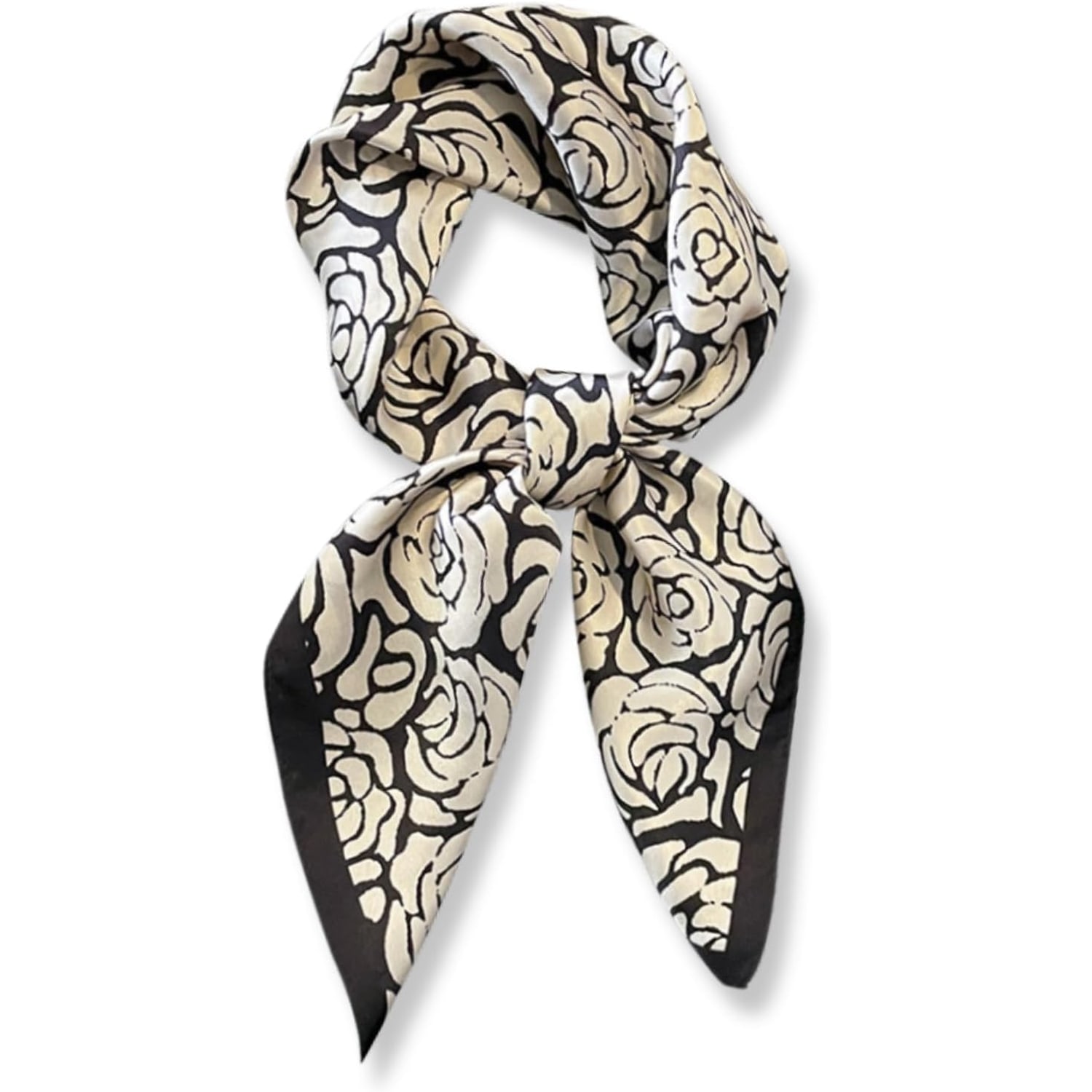
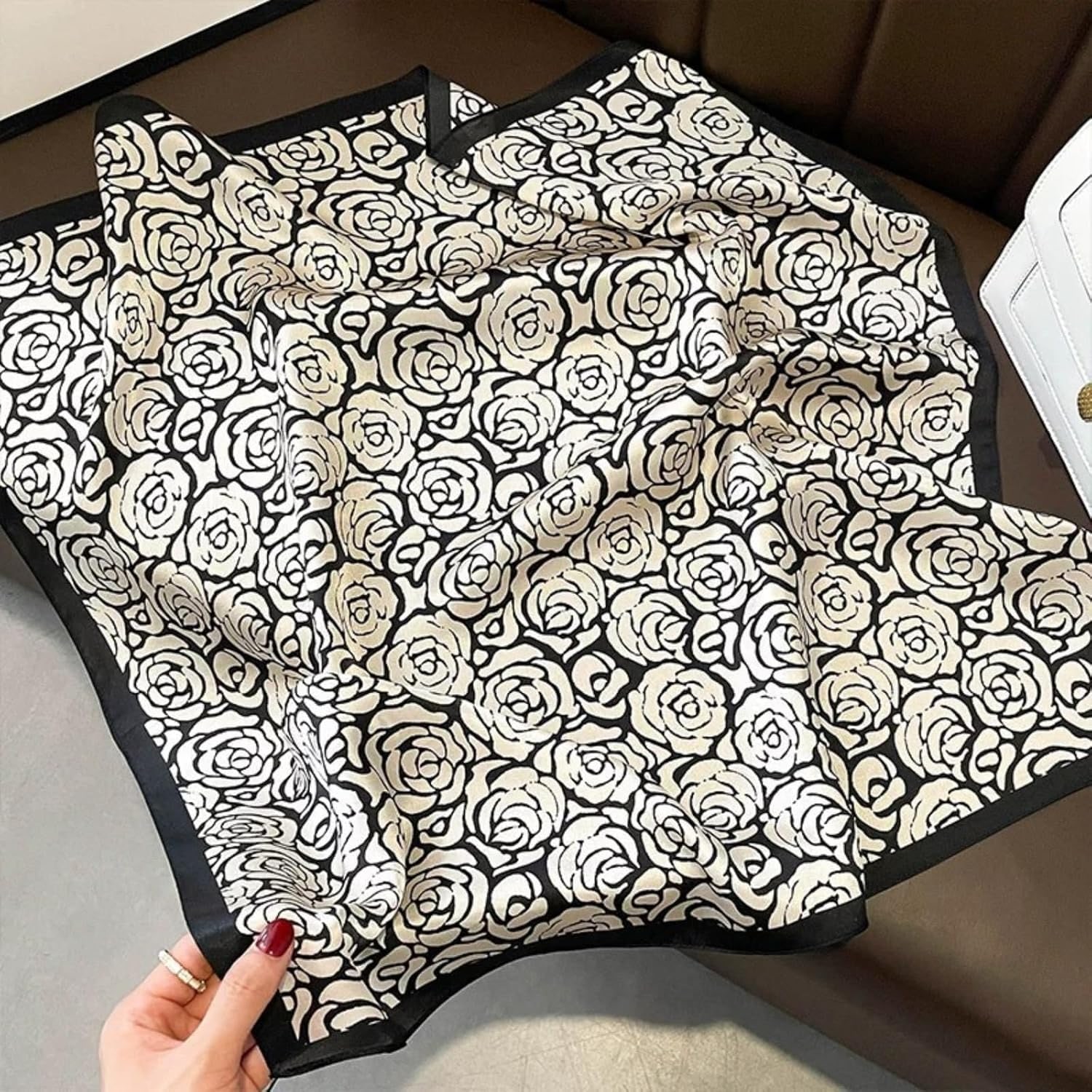
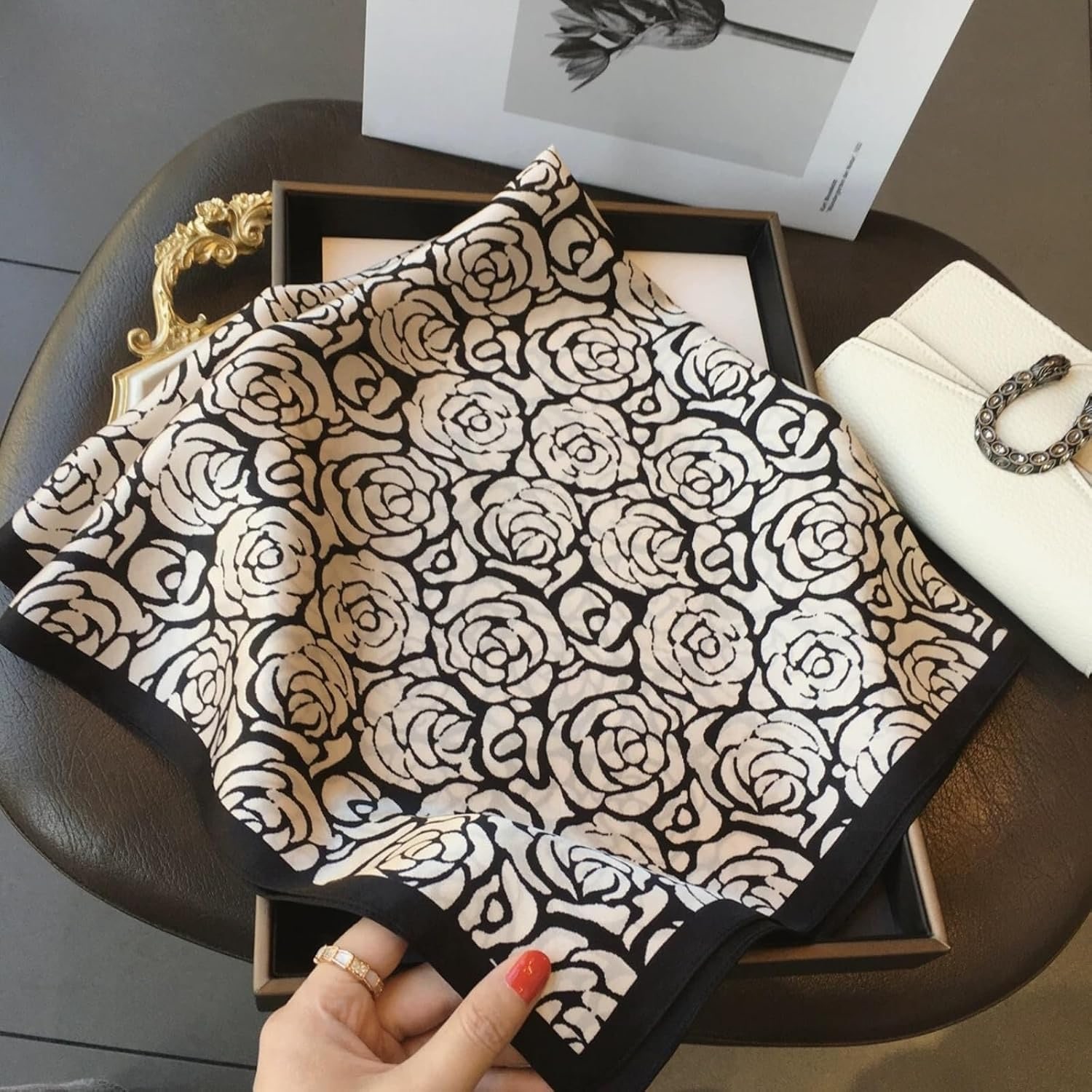
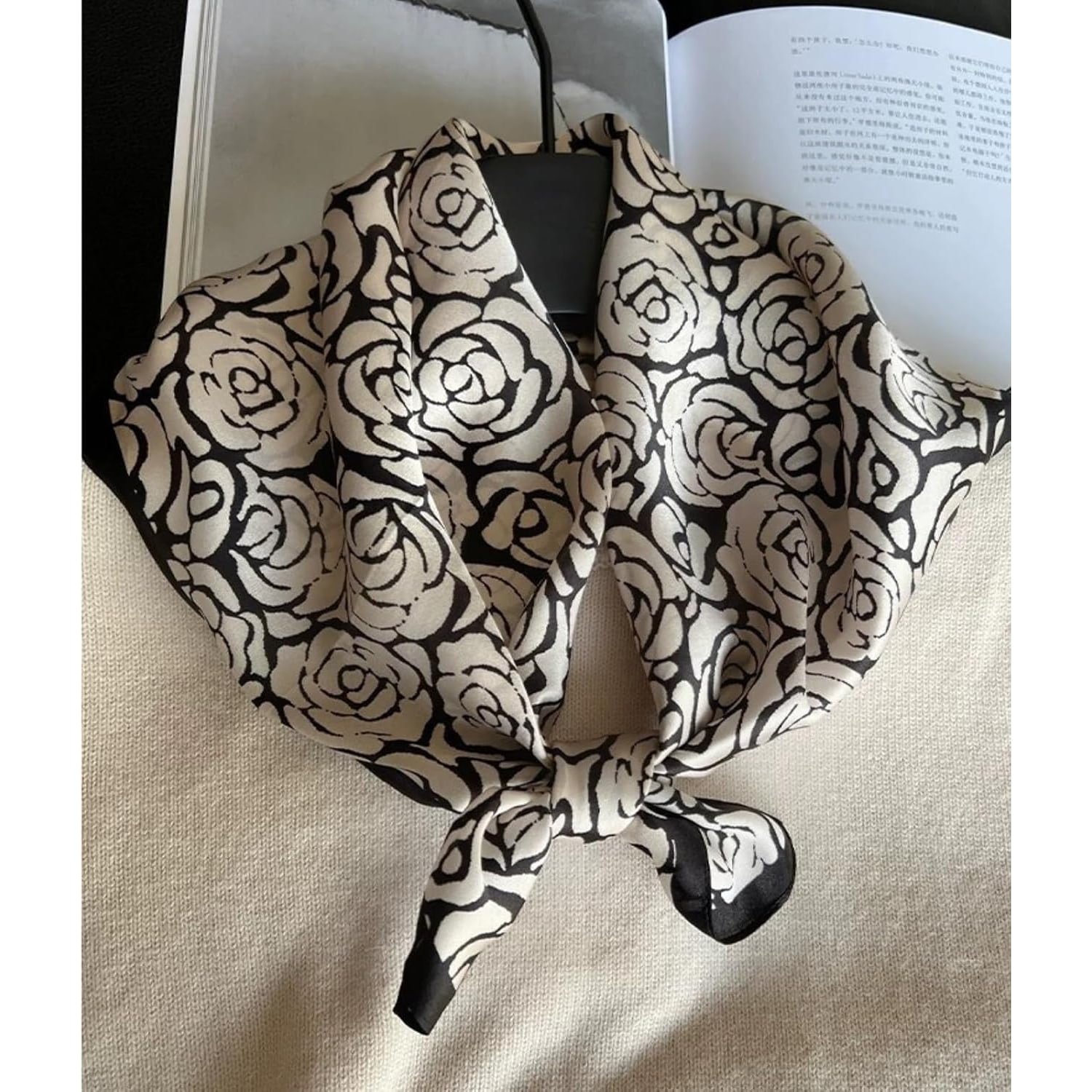
This one is 66 x 66 cm of 100% mulberry silk, printed with cream roses on a black ground. The rest of this guide is about why that combination of size, fibre and print tends to work, and how to get the most out of it.
Why size decides everything
Square scarves come in roughly three sizes, and the size changes what the scarf can do far more than the pattern does.
Small squares, around 50 to 55 cm, are neckerchiefs. They tie neatly and sit flat under a collar, but you cannot do much else with them. Open one over your head and it barely reaches your ears.
Large squares, 88 to 90 cm, are the classic luxury format. They can be worn as a shoulder wrap, a full head covering, or even a top. The trade-off is bulk. Fold a 90 cm square down for a neck knot and you get a lot of fabric sitting at your throat, which can overwhelm a smaller frame or a slim collar.
The 66 cm medium sits between the two, which is why it is such a practical thing to own. Folded on the bias it makes a band long enough to go round the neck and tie off centre without a mountain of fabric. Opened out it covers the crown and the back of the head well enough to be a genuine head scarf. If you are only ever going to own one square, this is usually the size that earns its keep.
What mulberry silk actually gives you
Mulberry silk comes from silkworms fed on mulberry leaves. That controlled diet produces long, even filaments, and long filaments make a smoother, stronger yarn than short staple fibres do. In the finished fabric you notice three things.
First, the shine is soft. Good silk catches light the way water does, in a gentle sweep, rather than the hard flash you get from cheap polyester satin. That difference is obvious in photographs and even more obvious in person.
Second, it drapes. Silk falls into curves and holds the shape you fold it into. A knot stays tied. A headband keeps its width across the crown instead of twisting into a rope by lunchtime.
Third, it is smooth. Hair and skin slide across silk with less friction than across cotton, wool or a synthetic knit. That is the whole reason people reach for a silk square when they want their hair to survive a car journey or a gusty walk from the station.
The weave and the momme weight of this particular scarf are not stated by the maker, so we will not guess at them. What is confirmed is the fibre, the size and the print.
Who it suits
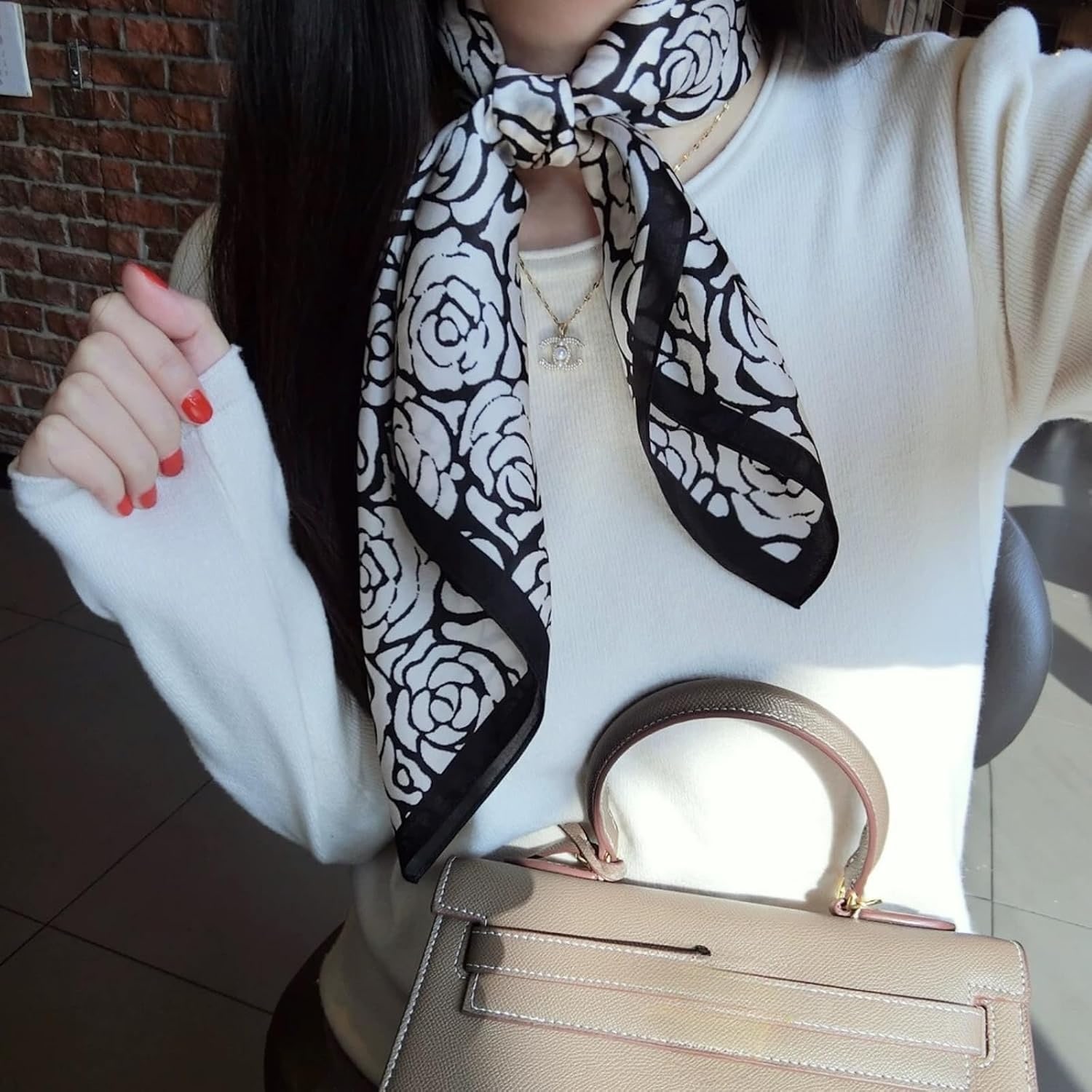
If you wear mostly solid colours, a black and cream print is the easiest pattern to introduce. It reads almost like a neutral. It will sit against navy, camel, grey, white, denim and black without any clashing, and it adds enough interest to stop an outfit looking unfinished.
If you have curly or textured hair, a silk square is a familiar tool. At 66 cm you can cover most of the head and tie at the nape. If you want to enclose a lot of length or volume completely, a 90 cm square gives you more material to work with, so be honest with yourself about how much hair you are covering.
If you travel, this is an easy thing to pack. It weighs almost nothing, folds into a corner of a bag, and does three jobs when you have packed light. It also makes a blank hotel outfit look deliberate.
If you are buying a gift, a scarf removes the sizing problem entirely. There is no waist, no shoe size, no sleeve length to get wrong. Black and cream is also age-neutral in a way that most prints are not.
Five ways to wear it
The neck knot is the standard. Fold corner to corner into a triangle, then roll the long edge down towards the point until you have a band around 6 to 10 cm wide. Put the middle at your throat, take the ends behind your neck, cross them, bring them forward and tie off to one side. Off centre always looks better than dead centre.
The headband is the fastest. Fold on the bias into a narrower band, lay it across the head, and tie at the nape or just behind one ear. On very fine hair, slide two grips under the band to stop it travelling.
The head scarf is the traditional one. Open it flat, fold into a triangle, place the long edge across the forehead and tie under the chin or at the back. This is where the 66 cm size really earns its place.
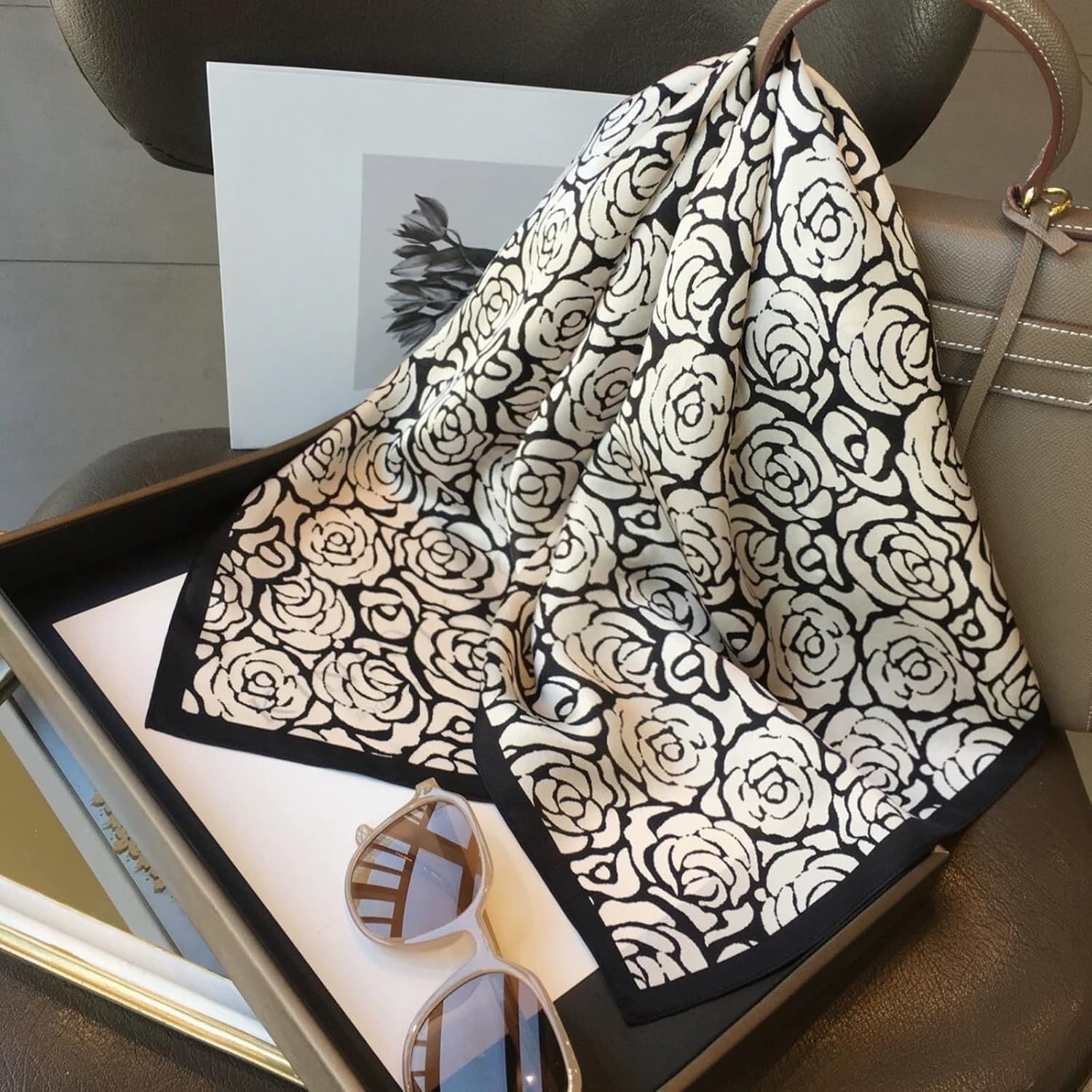
The bag scarf takes ten seconds. Roll the square loosely and tie it round the base of a handle in a knot or a small bow. Let the ends hang rather than tucking them in.
The belt loop trick is the one most people forget. Thread the rolled scarf through the loops of jeans or trousers and knot it at the front hip. It works best with a plain top so the print has room.
Caring for it so it lasts
The care instruction is hand wash only, and it is worth following. Fill a basin with cool water, add a small amount of detergent made for delicates, and move the scarf through the water with your hands for a minute or two. Do not rub, do not soak for hours, and do not wring it out.
Rinse in clean cool water. Lay the scarf flat on a towel, roll the towel up and press gently to take the water out, then unroll and dry flat or lay it over a hanger. Keep it away from radiators and direct sunlight, both of which will dull a printed colour over time.
Press it on the lowest silk setting, on the reverse side, while it is still slightly damp. That gets the surface back without risking a shine mark on the print.
Two habits protect a silk scarf more than anything else. Let perfume and hairspray dry fully before the scarf goes on, because alcohol can leave stiff marks. And put your jewellery on first, since rings, watch clasps and brooch pins are the main cause of pulls in fine silk.
For storage, fold or roll it loosely into a drawer or a cotton bag. A sharp hook over months will leave a crease you cannot press out.
The short version
A 66 x 66 cm square in 100% mulberry silk, printed with cream roses on black. Medium size, so it ties small at the neck and still opens wide enough for your hair. Soft shine, good drape, and a smooth surface that hair slides over more easily than cotton. Black and cream behaves like a neutral, so it goes with nearly everything you already own.
Hand wash only, dry flat, cool iron on the reverse. Look after it that way and a silk square like this stays in rotation for years, getting a little softer each season.