
The complete guide
How To Choose A Silk Sleep Mask That Actually Stays On
The problem nobody mentions until it is 3am
Most people do not have a dark bedroom. They think they do, until a car swings into the street and the headlights sweep across the ceiling, or until the first grey light arrives at half four in June. Hotel rooms are worse. Blinds never quite meet, and there is always a smoke alarm glowing somewhere above the door.
Light is a strong signal. Your body uses it to decide what time it is, and it does not care that you need another two hours. The fastest way to take that signal away is not new curtains or a different room. It is a strip of fabric across your eyes.
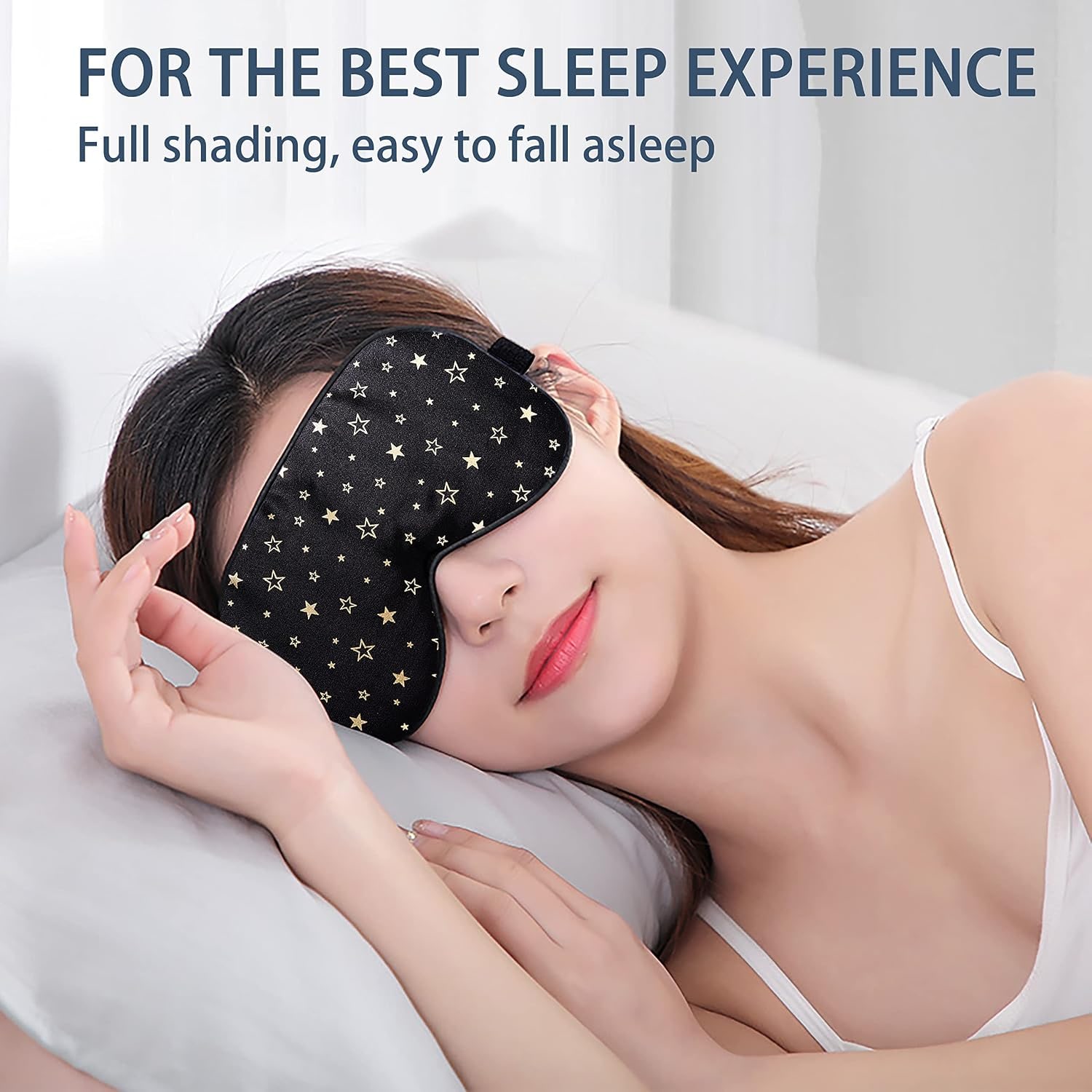
That is all a sleep mask is. The difference between one that helps and one that ends up on the floor by 2am comes down to two things, what it is made of and how it fastens.
Why mulberry silk rather than cotton
Run a cotton t-shirt across the back of your hand, then do the same with a silk scarf. You will feel the difference straight away. Cotton catches. Silk slides.
That matters more than it sounds for something worn on your face for seven or eight hours. The skin around the eyes is the thinnest on the body, and it moves every time you turn over. A fabric that grips will tug at it all night. A smooth one just moves along with you.
Mulberry silk is the grade most commonly used for sleep accessories. The fibres are long and even, which is what gives the fabric its smoothness and its particular soft shine. This mask is made from 100% mulberry silk, so there is no polyester blend sitting underneath pretending to be the real thing.
There is a second, more practical reason people choose silk. It does not hold heat the way a thick foam mask does. If you run warm at night, a heavy padded mask turns into a hot compress by midnight. A light silk one does not.
The strap decides whether you keep wearing it
Here is the part most buyers skip over. A sleep mask is only as good as the thing holding it on.
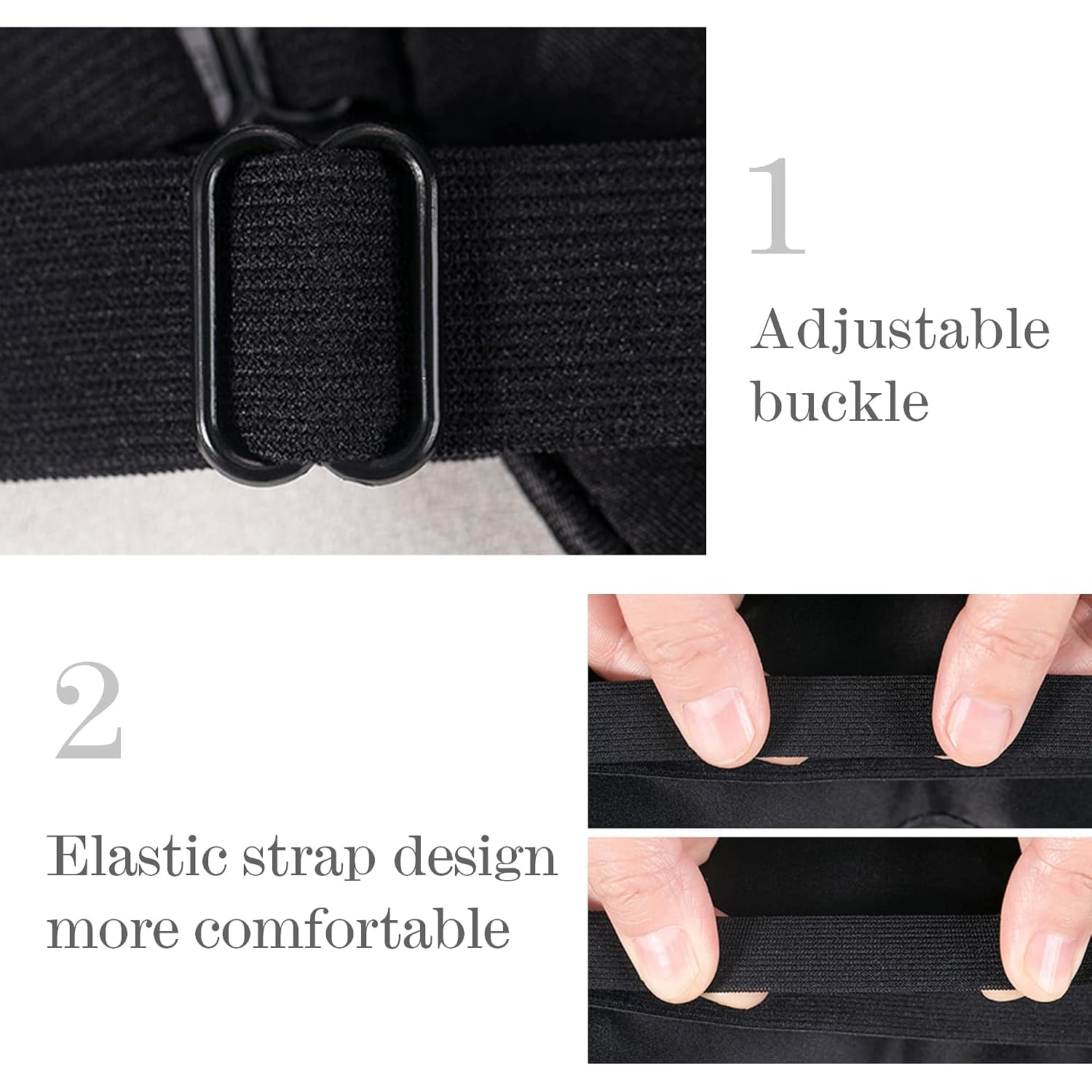
Cheap masks use a sewn elastic loop. It is one length, and that length is somebody's guess at an average head. If your head is smaller, the mask slides. If it is larger, the elastic digs a line across your skull and you wake up with a headache you blame on the wine.
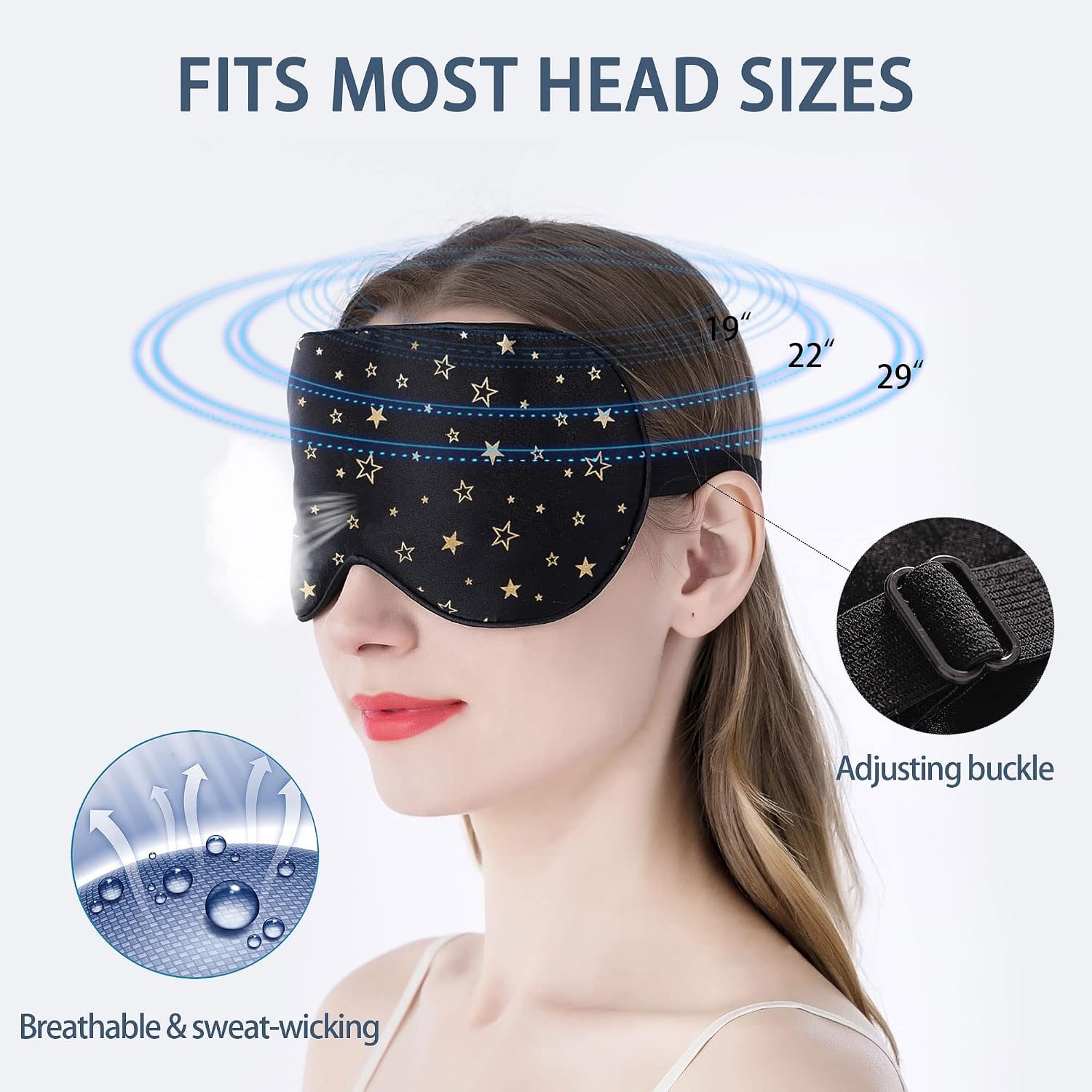
This mask uses a hook and loop fastening instead. You press it together wherever it feels right. That sounds minor until you have used one. It means you can set the tension once, properly, and it stays there. It also means you can loosen it on nights when your hair is up, or tighten it a notch for a flight where you will be upright and moving.
When you first put it on, aim for snug rather than tight. The mask should rest against your face and stay put when you roll from your back onto your side. If you can feel pressure on the bridge of your nose, it is too tight. People consistently over-tighten masks on the first night and then decide masks are not for them.
Who gets the most out of a mask like this
Side sleepers. Flat, light masks work far better here than contoured ones with a rigid frame. There is nothing hard to press into the pillow and nothing to shove the mask sideways off your face. The strap sits at the back of the head rather than crossing the ear.
Travellers. It folds flat and weighs next to nothing, which is why a silk eye mask for travel is one of the few genuinely useful things to carry. It does not take a pocket of its own. On a long haul flight, pair it with ear plugs and you have most of the problem solved.
Shift workers. Sleeping between 9am and 4pm is a different sport. Blackout curtains help, but there is always a gap, and a mask covers that gap directly. If daytime sleep is your normal, treat the mask as basic kit rather than a luxury.
Light sleepers with a partner on a different schedule. If one of you reads late and the other is up at six, a mask ends a surprising number of low-level arguments.
Anyone who naps. The best eye mask for afternoon naps is whichever one you can put on without thinking. Simple is the whole point.
Setting your expectations on darkness
Be clear about what a flat silk mask does. It cuts light dramatically. It does not produce the pitch black of a moulded dome mask with a raised eye cup.
The trade-off is comfort. Contoured masks block more light but have structure to them, and that structure can push into the pillow if you sleep on your front or side. A soft silk mask follows the shape of your face instead. For most people in a normal bedroom with normal curtains, that is more than enough. If you work nights and sleep in a south-facing room with thin blinds, you may want both, the curtains and the mask, working together.
Fit affects darkness too. A loose mask lets light in at the nose. Taking thirty seconds to set the strap properly does more for darkness than almost any design feature.
Looking after it
Silk asks for a bit of care, but not much. The rule here is hand wash only.
Use cool water and a small amount of detergent made for delicates. Swish the mask through gently for a minute or two. Do not scrub it, do not wring it, do not twist it. Rinse in clean cool water until there is no soap left.
To dry it, lay it on a towel, roll the towel up and press. That pulls most of the water out without stressing the fibres. Then unroll it, reshape the mask flat and leave it somewhere with a bit of air. Not on a radiator, not on a sunny windowsill. Heat and strong sun are what age silk and dull a printed pattern.
One small thing that saves a lot of grief. Press the hook and loop strap closed before it goes anywhere near the water. An open hook strip will grab at silk the moment it touches it, and the pulls it leaves do not come out.
Wash it every week or two with regular use. A mask sits against your face all night and picks up skin oils in the same way a pillowcase does, so it benefits from the same rhythm.
Buying it as a gift
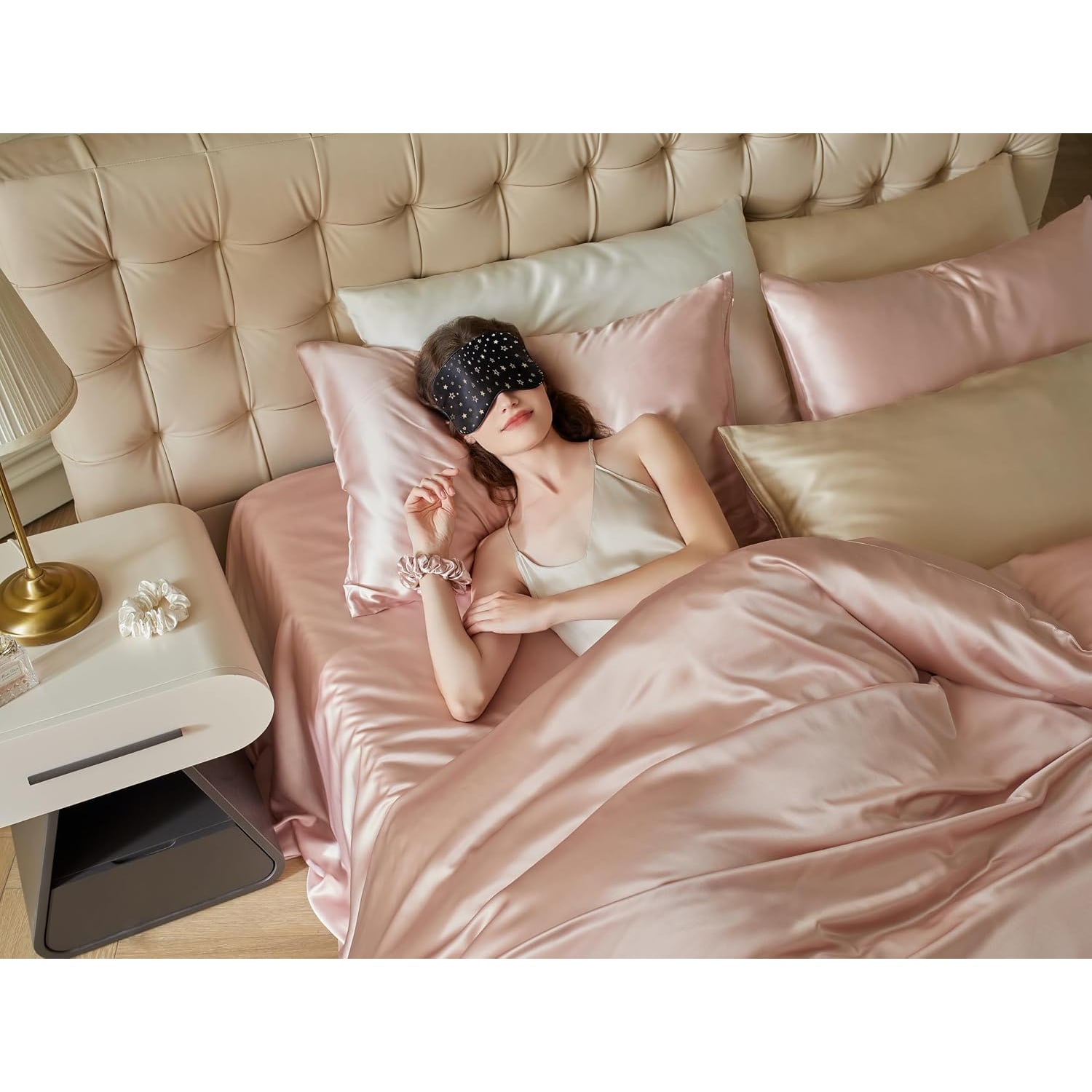
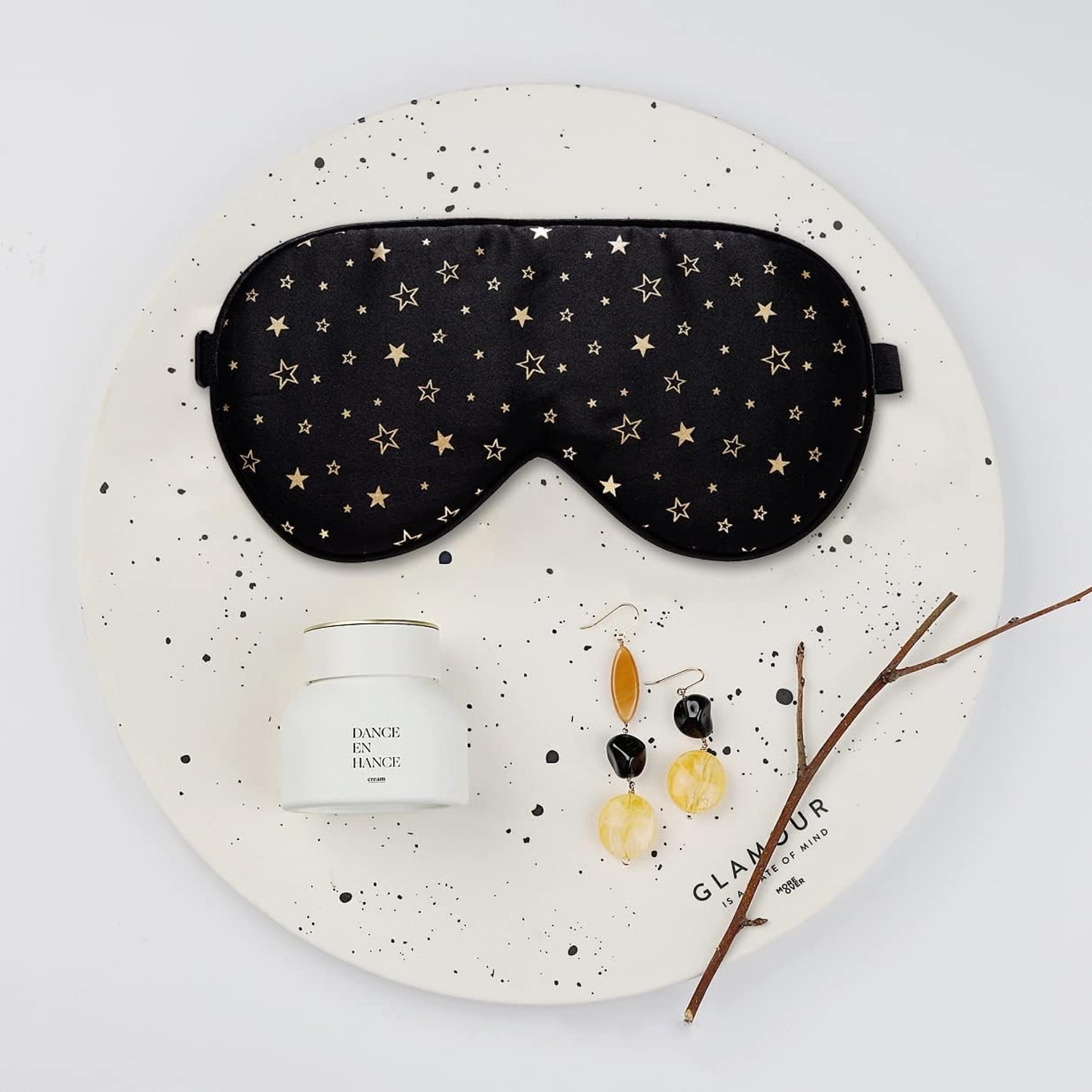
Sleep masks are one of the easier small presents. They are useful rather than decorative, they post flat, and they suit almost anyone. A gold star print mask reads a little more considered than a plain black one, which helps if you want it to look like you chose rather than grabbed.
They work particularly well for people about to travel, new parents snatching sleep in daylight, and anyone who has recently complained to you about their curtains. If you want to build it out, a mask plus ear plugs plus a small pouch makes a tidy little sleep kit for very little money.
How to make it work from night one
Put it on before you get into bed rather than after. Set the strap while you are sitting up and can feel what you are doing.
Give it three or four nights. Wearing something on your face is a new sensation and the first night often feels odd even when the fit is correct. Most people stop noticing it entirely by the end of the first week.
If you wake up and it has come off, tighten by a small amount, not a lot. If you wake with marks on your temples, loosen it. The adjustment is there precisely so you can dial it in.
The short version
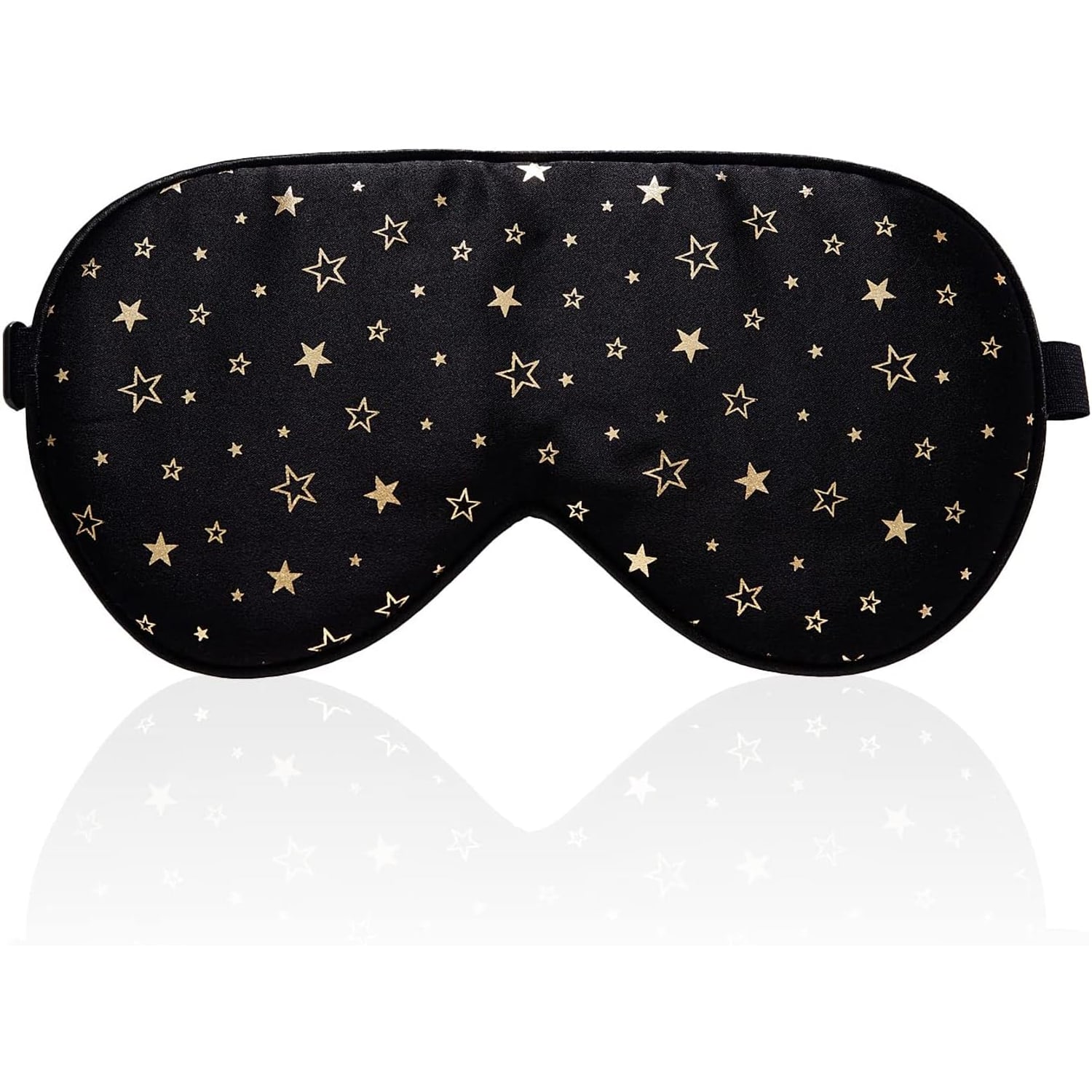
This is a light mask made from 100% mulberry silk, printed with small gold stars on black, held on with an adjustable hook and loop strap. The silk is smooth against the skin, the strap means you are not stuck with somebody else's idea of head size, and the low weight keeps it comfortable for a full night or a twenty minute nap.
Wash it by hand, dry it flat, and keep it out of the sun. Do that and it stays soft and keeps the print sharp for a long time.
If your room is not as dark as you would like, this is the simplest fix available, and it packs into a coat pocket.