
The complete guide
Silk Hair Ties, A Practical Buyer's Guide
The small problem nobody talks about
Hair ties are one of those things you buy without thinking, lose constantly, and quietly resent. The cheap packs of thin elastics do the job, but they dig in, they snap, and they take a few strands with them every time you pull one out. Fabric covered bands are kinder, except most of them are cotton or polyester, which have a texture you can feel under your fingers. That texture is the thing that catches.
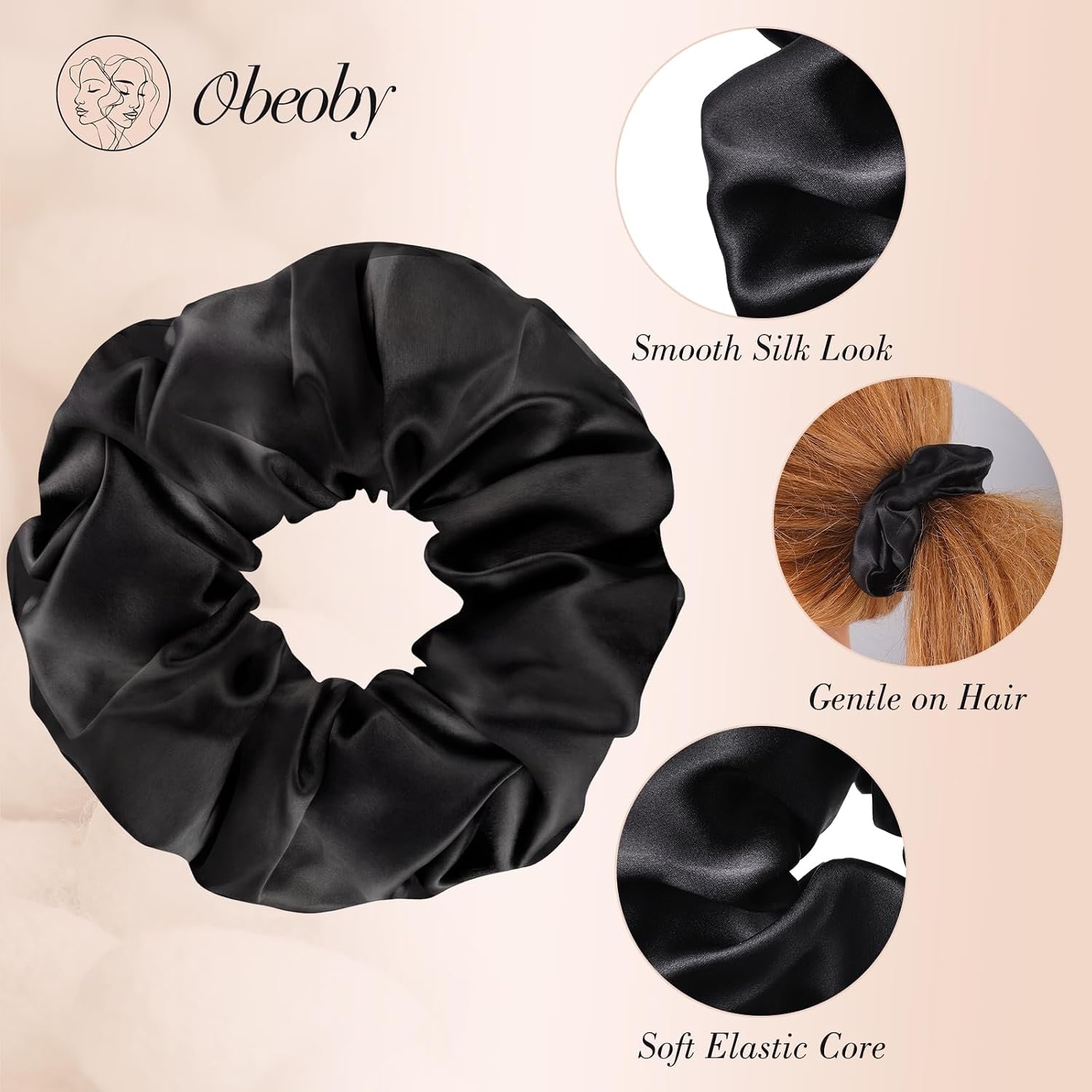
Silk is different because of the fibre itself. A silk thread is long and smooth with very little surface roughness, which is why silk fabric feels slippery rather than grippy. When hair sits against it and moves, it tends to slide rather than drag. That is the whole idea behind a silk hair tie. It is not magic and it will not change your hair, but it does remove one source of daily friction.
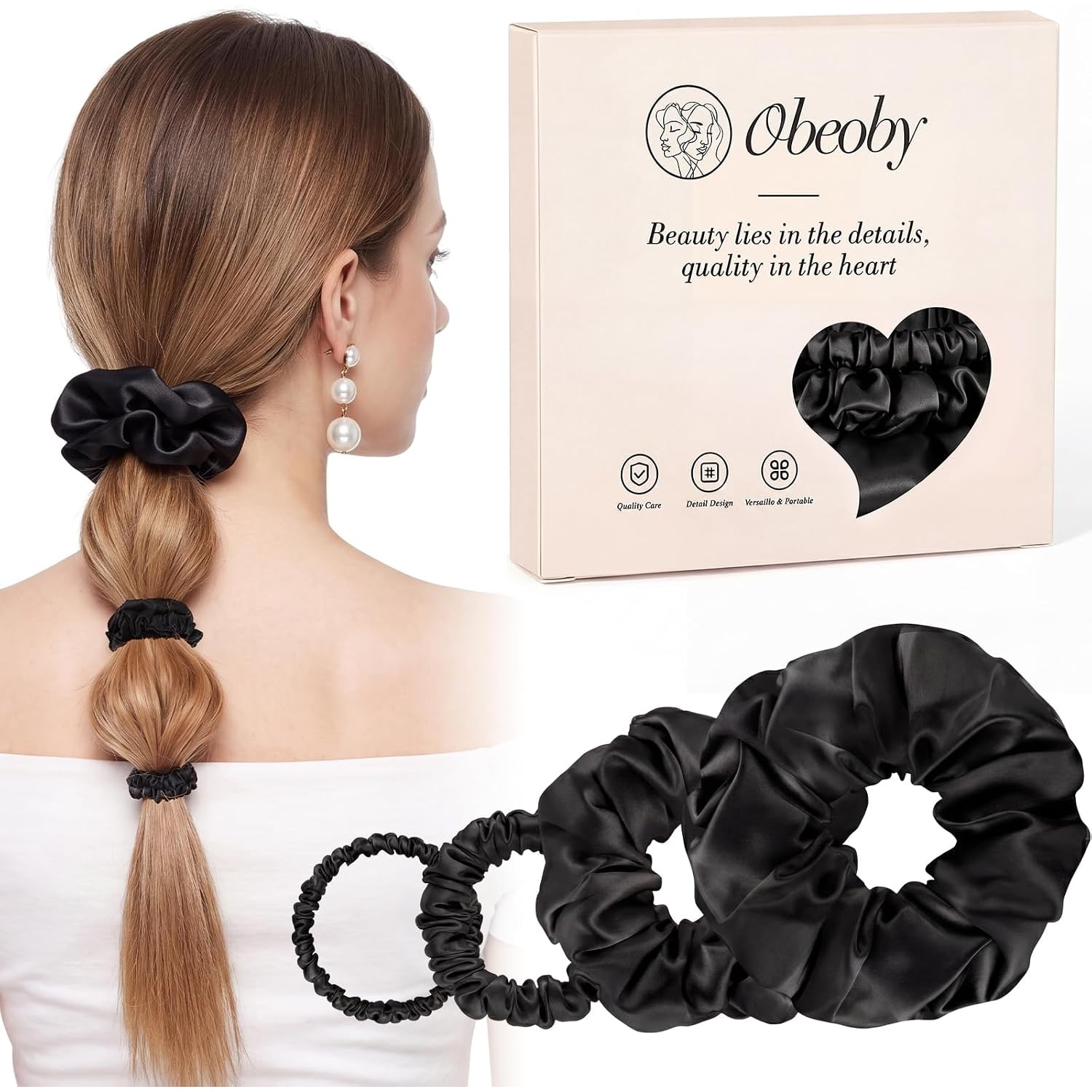
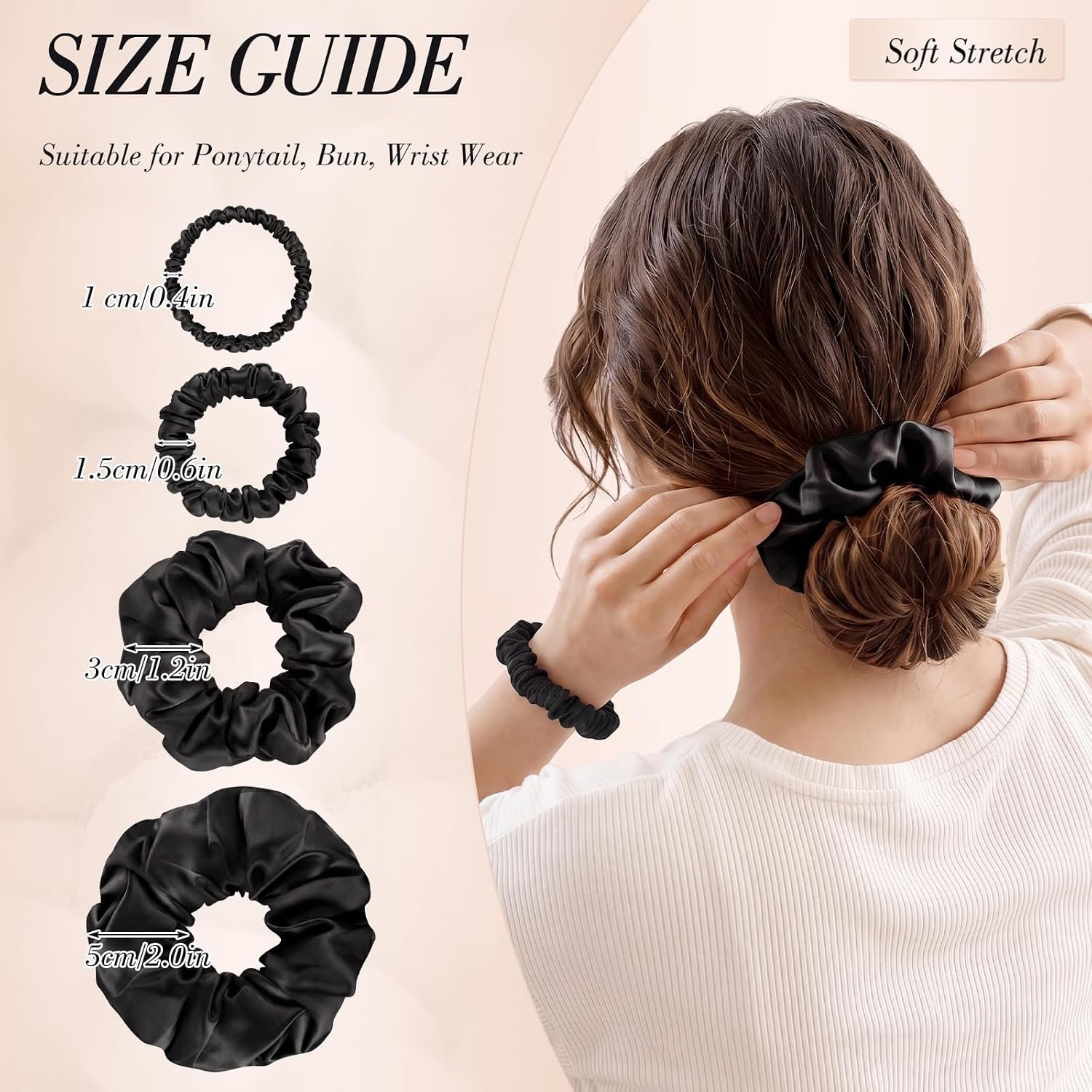
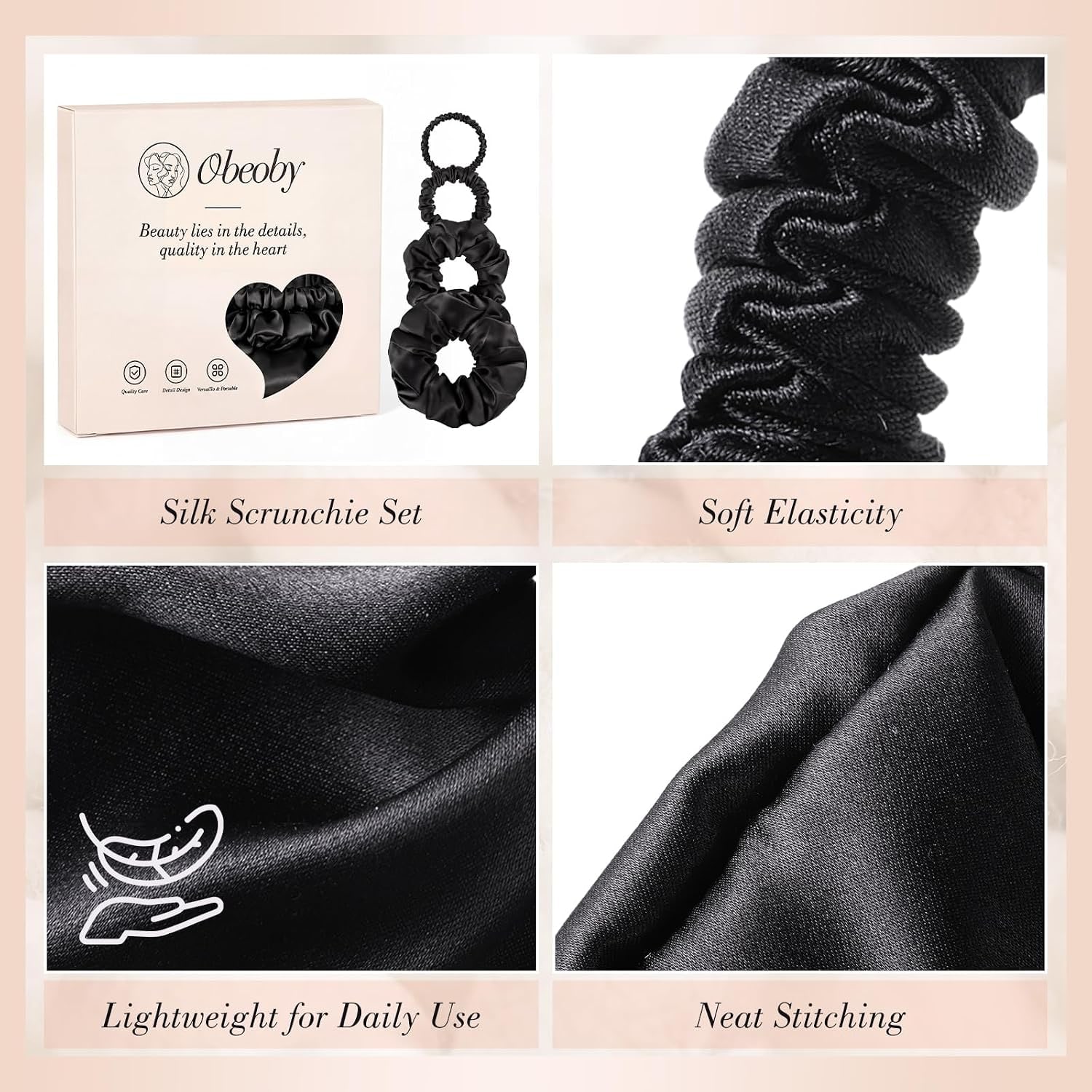
This set gives you four black ties in 100% mulberry silk over an elastic core. Two are full scrunchies and two are skinny ties, so you have a soft option and a secure option in the same box.
How a silk hair tie is actually built
Underneath the silk there is ordinary elastic. That is what does the holding. The silk is a sleeve wrapped around it, stitched into a loop, and the amount of fabric in that sleeve is what decides whether you end up with a scrunchie or a slim tie.
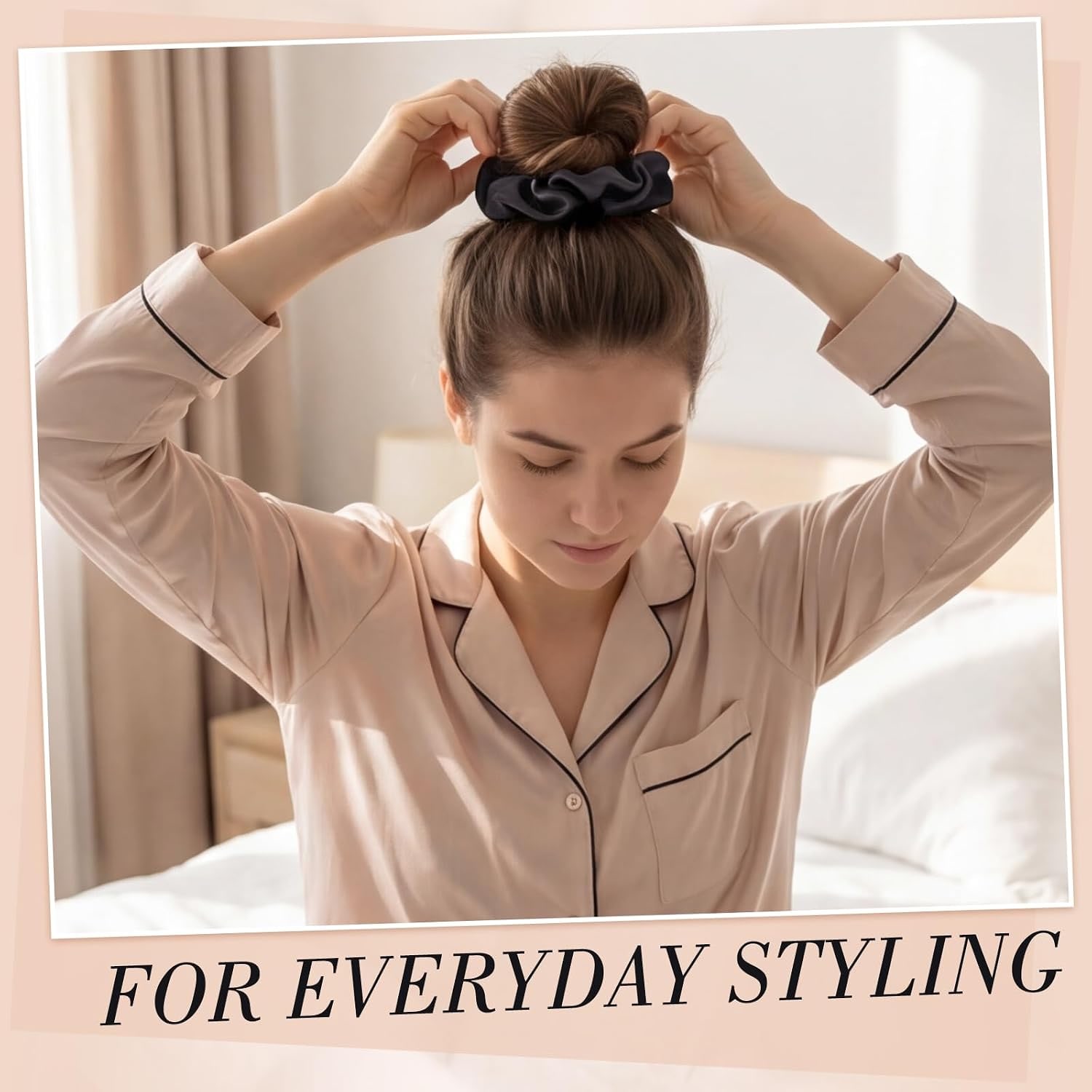
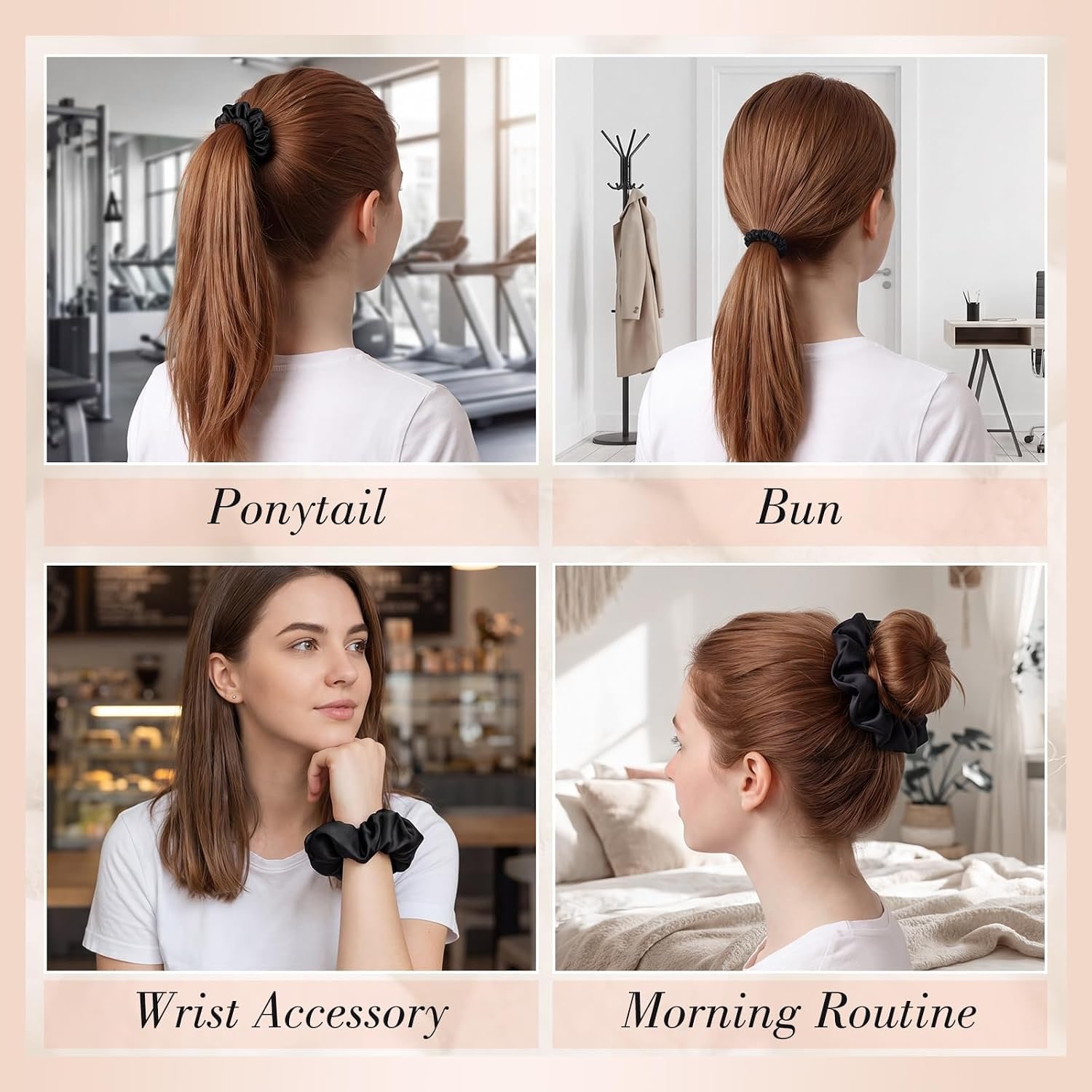
A full scrunchie has generous fabric gathered along the elastic. When you wrap it around a ponytail, that fabric bunches up and spreads the pressure across a wider band of hair. The result is a looser, rounder hold and less of a sharp dent when you take it out. It also looks like an accessory, which is half the reason people wear them.
A skinny tie has far less fabric. It sits close to the elastic, wraps more times around a smaller section, and holds tighter. It is the one you want when the hair has to stay exactly where you put it, or when a bulky scrunchie would get in the way under a helmet, a cap or a hood.
Having both means you are not compromising. A lot of people buy the best silk scrunchies they can find and then discover they need something slimmer for the gym. This set covers both situations.
Who gets the most out of them
Long hair benefits the most, simply because there is more of it moving against the tie. If you tie your hair up several times a day, the number of small snags adds up, and a smoother surface cuts that down.
People who sleep with their hair up are another obvious group. A loose bun held with one of the wider ties is a common night routine, and silk hair ties for sleeping pair naturally with a silk pillowcase if you already have one. The key word is loose. A tight tie worn all night will pull no matter what it is made of.
Fine hair does well with the skinny ties, which wrap several times and grip a small section properly. Thick hair does well with the wide ones, which spread the load, though a very heavy ponytail may need two wraps or a slim tie as a base layer underneath.
Then there is the plain practical group, the people who just want four hair ties that do not look cheap and do not live in a tangle at the bottom of a bag. Black suits that use perfectly.
Choosing between the two widths
The simplest rule is activity based. If you are sitting still, a full scrunchie is more comfortable and looks softer. If you are moving, a skinny tie stays put.
The second consideration is where the tie sits. High ponytails and top knots suit the wider ties because the extra fabric gives the bun shape. Low ponytails under a collar, and the end of a plait, suit the slim ties because they sit flat and do not bulk out.
The third is how visible you want it to be. Black skinny ties more or less disappear in dark hair. Black scrunchies are seen, in a good way, and they read as deliberate rather than accidental.
There is no need to overthink it. Try both in the first week and you will quickly settle into a pattern. Most people end up with one of each in rotation and the other two as backups.
Looking after silk ties
Silk is not fragile, but it is not indestructible either. The main thing is heat and friction, which is why hand washing wins.
Fill a bowl with cool water and add a small amount of mild detergent. Swirl the ties around for a minute, let them sit briefly, then rinse in clean cool water. Do not wring them out. Press them in a towel instead, then lay them somewhere airy to dry. Radiators, tumble dryers and strong sunlight all shorten the life of both the silk and the elastic inside.
Washing every week or two is plenty for ones in daily use. If you have been to the gym or used a lot of hairspray, wash sooner. Product build up is what dulls the surface of any fabric, and the whole point of a silk tie is the smooth surface.
Storage matters more than people expect. Elastic relaxes when it is held stretched, so do not park your ties over a door handle or a bottle. Keep them loose in a drawer or back in the box. That one habit adds months to how long they hold their shape.
Finally, rotate them. Four pieces is not just about losing them. Giving each tie a rest between wears lets the elastic recover and keeps all four performing about the same, instead of wearing one out while three stay new.
Where they fit in a wider silk routine
If you already use silk for sleep, these are the obvious next step. The logic is the same. Reduce the number of rough surfaces your hair meets over a day and over a night. A silk pillowcase handles the hours you are lying down, and silk hair ties handle the hours you are not.
They also make a sensible small gift, which is partly why they come boxed. Boxed silk scrunchies are easy to post, easy to wrap, and they land well with people who already have plenty of candles and mugs. Four pieces makes it feel like an actual present rather than a token.
What is not stated
Worth being straight about this. The confirmed facts are the material, 100% mulberry silk fabric with elastic inside, the colour, black, and the piece count, four, split across two widths. If those details matter to you, treat them as unknown rather than assumed.
The short version
Four black ties, all 100% mulberry silk over elastic, in two widths. The wide scrunchies give a soft hold and look good; the skinny ties hold tight and stay out of the way. Silk is smooth, so hair slides over it with less friction than it does over cotton or a bare band. Hand wash cool, air dry, store loose, rotate them.
If you tie your hair up every day, this is a low cost upgrade to something you already do several times a day without thinking about it.