
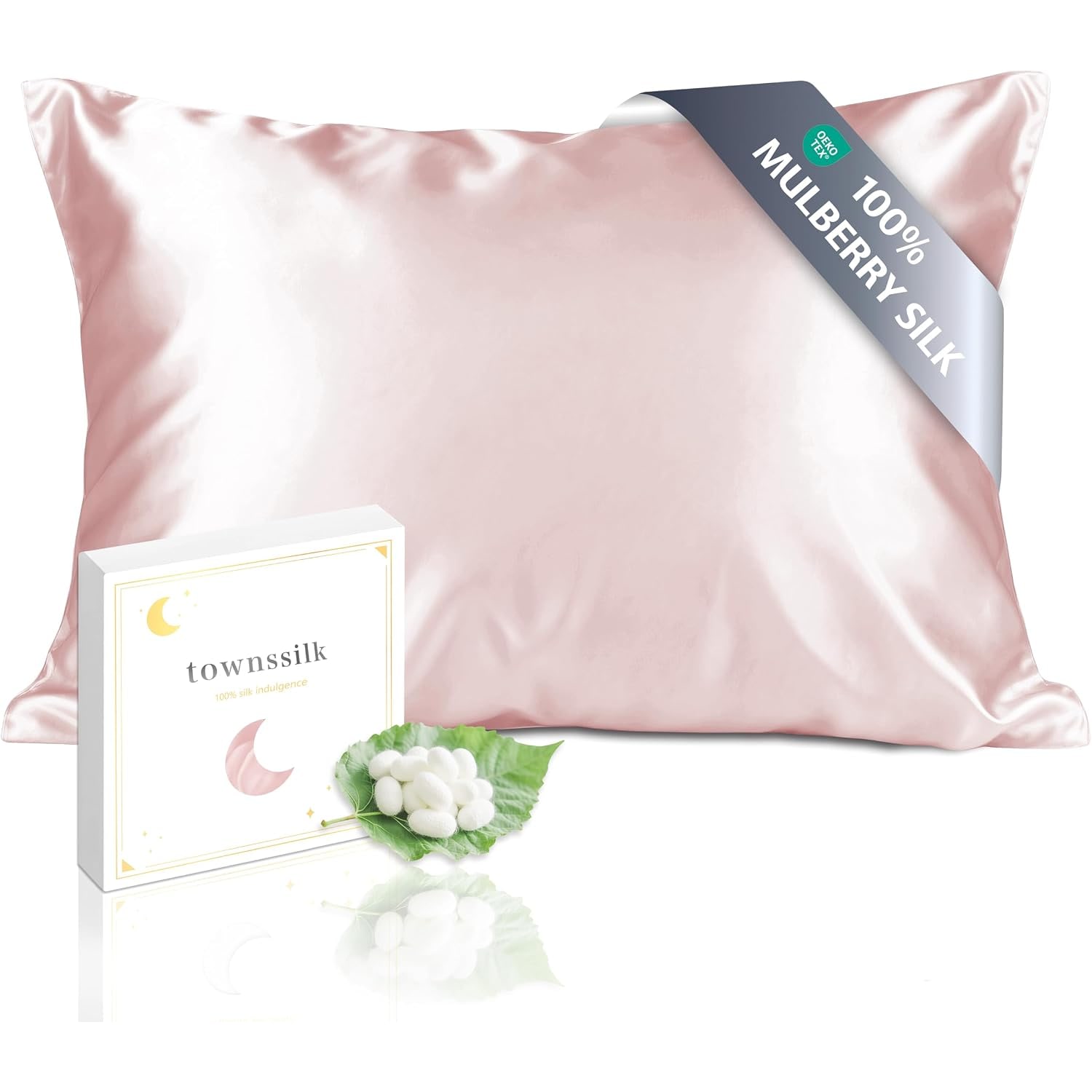
The complete guide
How to Choose a Silk Pillowcase, Momme by Momme
The problem with waking up rumpled
Most people never think about what their face is pressed against for a third of their life. A cotton pillowcase feels fine in the hand. Under a sleeping head, though, it behaves differently. Cotton is a short-staple fibre woven into a surface with thousands of tiny ridges. Hair catches on those ridges. Skin drags against them. Every time you turn over, there is a small amount of pull, and over seven or eight hours that adds up to tangles and sleep creases that take half the morning to settle.
Silk works differently because the fibre itself is different. Instead of short staples spun together, silk is one long filament. Woven up, it gives you a surface with far less texture. Hair slides. Skin slides. You still move about in the night, but the fabric gives way instead of gripping.
That is the whole argument for a silk pillowcase, and it is a simple one. Nothing magic, just less friction.
What momme actually tells you
If you have shopped for silk at all, you have run into the word momme. It is the weight measure for silk fabric, written as a number followed by "mm" in some listings, which confusingly has nothing to do with millimetres. Think of it the way you think of GSM for a towel or a duvet cover.
Silk bedding generally runs from about 16 momme at the light end up to 25 momme at the heavy end. Below 16 and the fabric starts to feel insubstantial, almost like a lining. Above 22 and you are paying a good deal more for a difference most sleepers struggle to name, plus the fabric takes longer to dry.
This pillowcase is 19 momme. That is squarely in the comfortable middle. It has enough body to sit flat on the pillow and hold a crisp edge, without the heft that makes some heavy silks feel warm. If someone asks what the best 19 momme silk pillowcase is good for, the honest answer is that it is the weight most people would pick if they tried the whole range side by side and then looked at the price.
The maker also lists a 600 thread count and a 6A silk grade. Thread count is less meaningful for silk than it is for cotton, because mills count in different ways. The 6A grade refers to the length and evenness of the raw filament, and it is a producer's own classification rather than an independent standard. Momme is the number worth anchoring on.
Mulberry silk, and why the name matters
Mulberry silk comes from silkworms raised on a diet of mulberry leaves and nothing else. The controlled diet and controlled conditions produce a long, even filament, which in turn produces fabric that is smooth and consistent across the whole piece. Wild silks are lovely in their own way, but they tend to be more irregular, with slubs and variation in the weave.
For a pillowcase, consistency is what you want. You are putting your face on the same patch of fabric for hours. A smooth, even surface with no slubs is the point. This is 100% mulberry silk, with no cotton blend and no satin-weave polyester pretending to be the real thing.
That last distinction trips a lot of people up. Satin is a weave, not a fibre. A polyester satin pillowcase is shiny and cheap and feels slippery for a few weeks. Silk is a natural protein fibre that behaves quite differently over time. When you are comparing the best pure silk pillowcase options online, check the fibre content line, not the word "satin" in the title.
Getting the size right
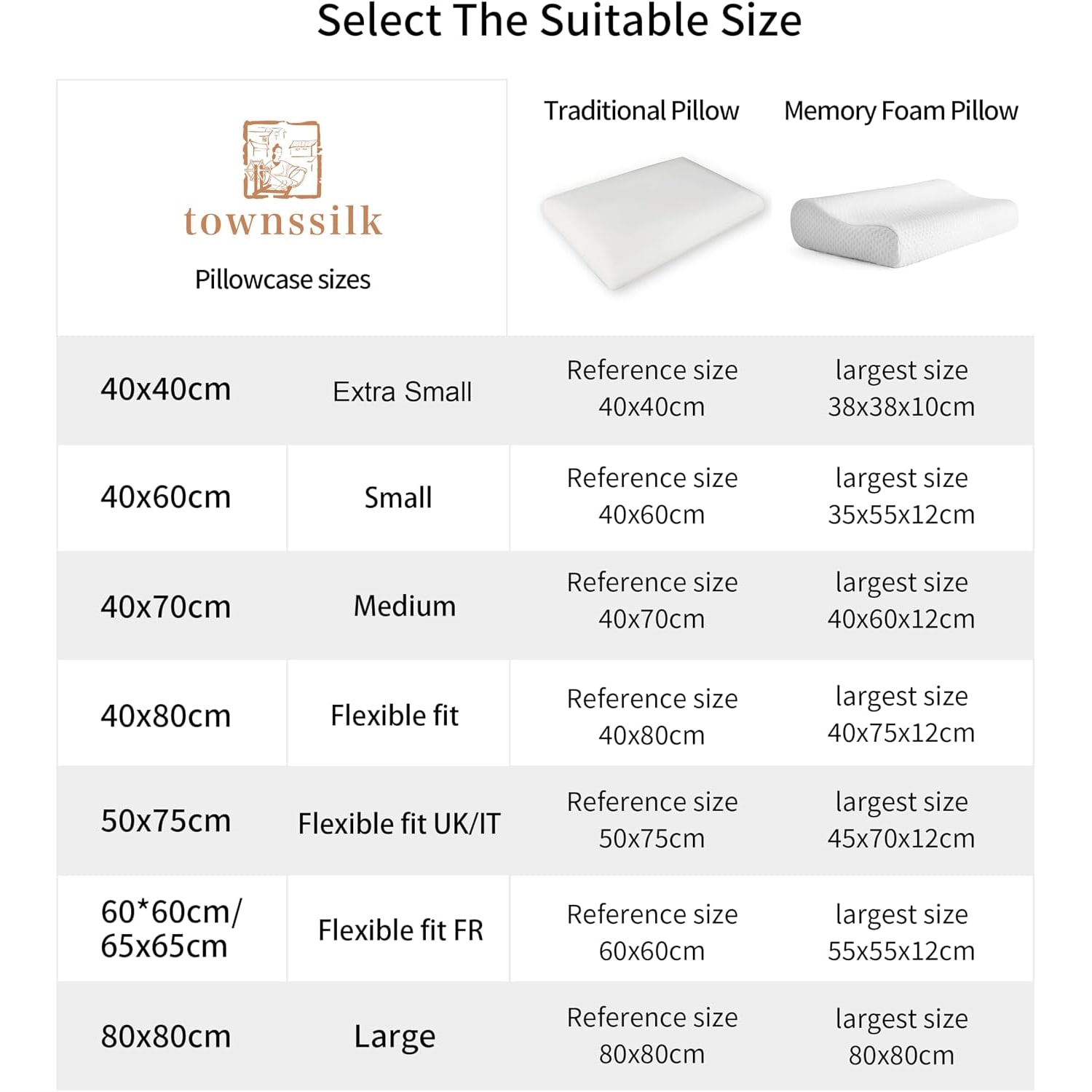
The size here is 50 x 75 cm, about 20 x 30 inches. In the UK that is the standard pillowcase measurement, sometimes called housewife size. If you buy pillows from a British retailer without specifying anything unusual, this is almost certainly what you have.
It is still worth measuring. Pull the current case off, lay a tape across the pillow the long way, then across the short way. If you get numbers close to 75 cm and 50 cm, you are fine. If you get something square, around 65 x 65 cm, you have continental pillows and this will not fit. If you get something longer, around 50 x 90 cm, you have a king pillow and it will not fit either.
Two minutes with a tape measure saves a return. People searching for the best 50 x 75 cm pillowcase are usually doing exactly the right thing: shopping by measurement rather than by name, because the names vary and the centimetres do not.
Why the zip matters more than you think
Pillowcases close in one of three ways. An open end, which nobody likes. An envelope flap, where a tongue of fabric tucks over the pillow. Or a zip.
Envelope flaps are common because they are cheap to make. The trouble is they work loose. The pillow inches out during the night and by morning there is a bare corner poking through. Worse, the folded edge can sit under your cheek and leave a line.
A zip solves both. This one is hidden along an edge, so the sleeping surface stays flat and unbroken. The pillow stays where you put it. One small habit to pick up: always zip the case closed before washing. An open slider can catch on silk and pull a thread, and that is the single most common way these cases get damaged.
Living with silk
Silk has a reputation for being fussy. It is not, really, it just has rules.
Wash it in cool water, by hand or on the machine's gentle cycle. Use a detergent made for delicates, which means a mild one without enzymes or optical brighteners. Pop it in a mesh laundry bag if you are machine washing, and wash it on its own or with other light, soft items. Zips and buttons on jeans will shred silk given half a chance.
Skip the bleach. Skip the fabric softener too, which sounds counterintuitive but softener leaves a film that dulls the natural lustre. Silk does not need help being soft.
Do not wring it out. Press the water out gently, reshape it while damp, and hang it to dry somewhere shaded. Direct sun will fade the dye over time, and a hot radiator will make the fibres brittle. Silk dries quickly anyway, often within a few hours indoors.
If it needs pressing, use the coolest iron setting, work on the reverse side, and ideally while there is still a little moisture in the fabric.
Wash it weekly, more often if you use hair oils or rich night creams. Buying two cases and alternating them means each one spends less time in the wash and both last longer. That is a trick people who have had silk bedding for years tend to figure out quickly.
Who it suits
Anyone who wakes up with tangled hair has a reason to try silk. Anyone who gets pillow creases pressed into their cheek that take an hour to fade has another. People with long hair or fine hair tend to notice the difference fastest, because those are the hair types that catch most on a cotton weave.
It also suits people who just like nice things on the bed. There is a tactile pleasure to a 19 momme silk pillowcase that does not need justifying with any further benefit. It feels good, and that is reason enough.
As a gift it is an easy win. There is no size to guess beyond checking the recipient uses standard UK pillows, and dusty pink is a shade that works with almost any existing bedroom. Grey, cream, white, natural linen, it all sits comfortably alongside.
The short version
Nineteen momme is the sensible middle weight for silk bedding, heavy enough to feel real and light enough to stay cool. Mulberry silk gives you a smooth, even surface, which is the whole point of the exercise. The 50 x 75 cm size fits a standard UK pillow, and the hidden zip keeps that pillow where it belongs. Wash it cool, dry it in the shade, keep it away from bleach and softener, and it will stay good for years.
Measure your pillow, order one, and see how a week of nights on silk compares. That is really the only test that counts.